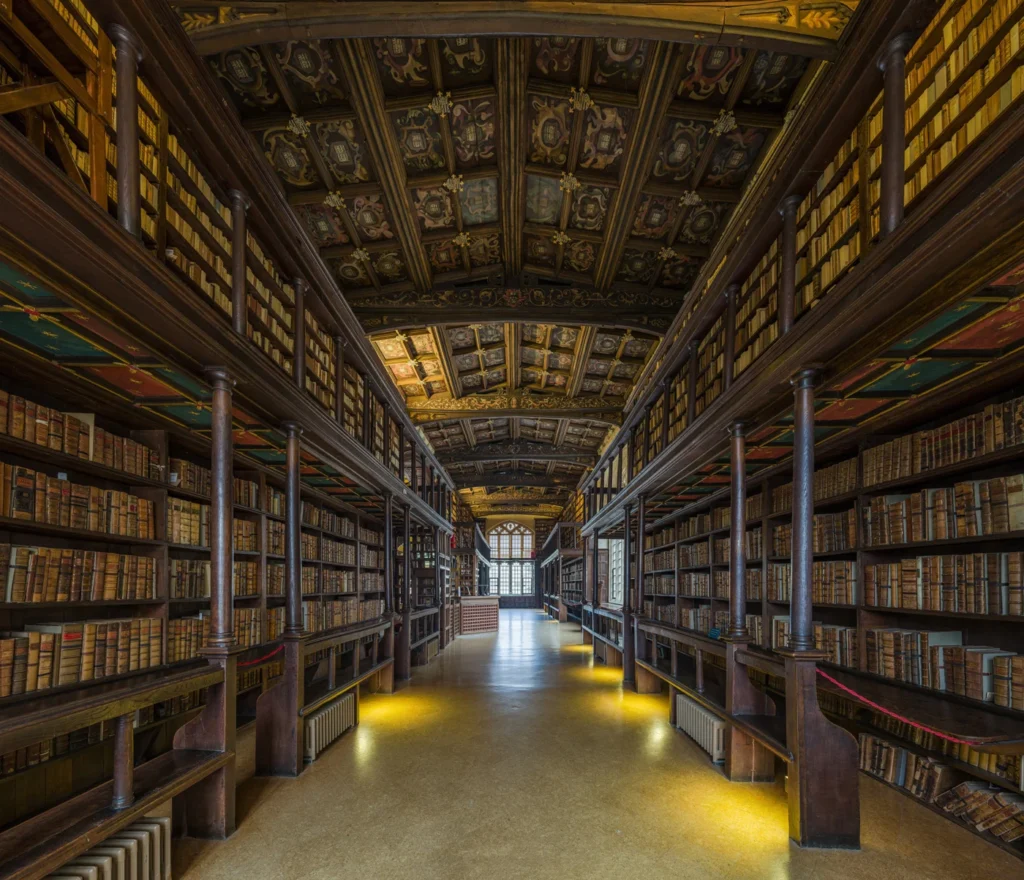
The next twenty poems continue Watson’s exploration of longing, emotional conflict and the literary inheritance of Renaissance love poetry.
For background on the sequence, explore the structure of Hekatompathia.
XXI
In the first staffe of this passion the Authour imitateth Petrarch, Sonetto 211.
Chi vuol veder quantunque può Natura
El ciel tranoi, venga à mirar costei, &c.
And the very like sense hath Seraphine in one of his Strambotti, where he beginneth thus,
Chi vuol [gap in source]eder gran cose altiere & nuoue,
Venga a mirar costei, laquale adoro:
Doue gratia dal ciel continuo pioue. &c.
WHo list to vewe dame Natures cunning skil,
And see what heau'n hath added to the same,
Let him prepare with me to gaze his fill
On her apas[gap in source], whose gifts exceed y• trūp offāe:
But let him come a pase before she flye
From hence, to fixe her seate aboue the skye.
But Iunoes gift she beares a stately grace,
Pallas hath placed skill amdd'st her brest;
Venus her selfe doth dwell within her face;
Alas I faint to thinke of all the rest;
And shall I tell wherewith I most haue warres?
with those her eyes, which are two heau'nly starres
Theire beames drawe forth by great attractiue power
My moistned hart, whose force is yet so small,
That shine they bright, or list they but to lowre,
It scarcely dare behold such lights at all,
[Vide Pli[gap in source]. nat. hist. lib. 10. cap. 3. et lib 28 cap 6. qui de hacre mutuatur ex Aristotelis historia. Potró vide Seraphinum sonet. 1. vbi de aquila suisque pullis per cō patationem legantissimé canit.] But sobbes, and sighes, and saith I am vndonne;
No bird but Ioues can looke against the sunne.
XXII
The substance of this passion is taken out of Seraphine sonetto 127. which beginneth thus.
Quando nascesti amor? quando la terra
Se rinueste di verde e bel colore;
Di che fusticreato? d'vn ardore,
Che cio laesciuo in se rinchiude e serra &c.
But the Author hath in this translation inuerted the order of some verses of Seraphine, and added the two last of himselfe to make the rest to seeme the more patheticall.
WHen werte thou borne sweet Loue? who was thy sire?
Whē Flora first adornd Dame Tellus lap,
Then sprung I forth from Wanton hote desire:
Who was thy nurse to feede thée first with pap?
Youth first with tender hand bound vp my heade,
Then saide, with Lookes alone I should be fed;
What maides had she attendant on her side,
To playe, to singe, to rocke thée fast a sleepe?
Vaine Nicenesse, Beautie Faire, and Pompous Pride;
By stealth when further age on thee did creepe;
Where didst thou make thy chiefe abiding place?
In Willing Hartes, which were of gentle race;
What is't where with thou wagest warres with me?
Feare colde as Ise, and Hope as hote as fire;
And can not age or death make end of thee?
No, no, my dying life still makes retire;
Why then sweete Loue take pittie on my paine,
Which often dye, and oft reuiue againe.
XXIII
The Author in this passion wisheth he were in like estate and condition with the Loooking Glasse of his mistres; by that meanes the oftner to be made happie with her fauourable and faire aspect. And in the last staffe he alludeth somewhat to the inuē tion of Seraphine, where he vseth these wordes, in writing vpon the Glasse of his beloued.
Che ho visto ogni qual vetro render foco
Quando è dal Sol percosso in qualche parte,
E[gap in source] Sol che in gliocchi toi dando in quel loco
Douria per reflexion tutta infiammarte &c.
THou Glasse, whetein that Sunne delightes to see
Her own aspect, whose beams haue dride my hart,
Would God I might possesse like state with thee,
And ioy some ease to quaile my bitter smart:
Thou gazest on her face, and she on thine;
I see not hers, nor she will looke on mine.
Once hauing lookt her fill, she turnes thée froe,
And leaues thee, though amaz'd, yet wel content;
But carelesse of my cares, will I or noe,
Still dwels within my breast with teares besprent;
And yet my hart to her is such a thrall,
That she dr[gap in source]'n out, my life departs withall.
But thou deceitfull Glasse (I feare) with guyle
Hast wrought my woes to shield thy selfe from ill,
Shot forth her beames which were in thee erewhile,
And burnt my tender brest against my will:
For Christall from it selfe reflectes the Sunne,
And fyres his coate, which knows not how tis done.
XXIIII
Seraphine in his Strambotti hath many prettie inuentions concerning the Lookingglasse of his Mistres: wherhence many particulars of this passion are cunningly borrowed, part beeing out of one place, and part out of an other. And in the latter end is placed this fiction by the Authour, that Cupid shooting his arrowe from out the faire eies of his Mistres, did so wounde him with loue and desire, that nowe he is past all recure by any phisicke, and therefore is faine to vse the olde verse, Hei mihi ꝙ nullis amor est medicabilis herbis.
THou glasse, wherein my Dame hath such delight,
As when she braues, then most on thée to gaze,
I maruel howe her beames that are so bright
Do neuer cause thy brittle sides to craze:
Thou should'st by reason mealt or easly breake
To feele such force, thy substance being weake.
For when she first with seeming stately grace
Bestowd on me a louing sweete regard,
The beames, which then proceeded from her face
Were such, as for the same I found no warde,
But needes persorce I must become content
To mealt in minde till all my wittes were spent.
And therewithall Cupido plaid his part,
He shotte a shaft throughout her christall eyes.
Wherewith he clest in twaine my yeelding heart:
And this is cause my panting heart still cries,
I breake, I mealt, helpe heau'ns in my behoue,
No herbe doth growe whose vertue cureth loue.
XXV
It is to be considered in reading this Passion, howe in some answeres, the accent or poynting of the wordes is altered, and therewithall howe the Authour walking in the woods, and bewayling his inward passion of Loue, is contraried by the replies of Echo: whose meaning yet is not so much to gainsay him, as to expresse her owne miserable estate in daily cōsuming away for the loue of her beloued Narcissus; whose vnkindnes Ouid describeth at large, [Lib. 3. Metamorph.] together with the extreme loue of Echo.
Author.
IN all this world I thinke none lou's but I.
Auth.
Thou foolish tattling ghest,
In this thou telst a lie.
Author.
Why? Loue him selfe he lodgeth in my brest.
Echo.
He lodgeth in my brest.
Auth.
I pine for griefe;
And yet I want reliefe.
Author.
No starre more faire then she whom I adore.
Echo.
Then [S. Liquescens immutat sensu[gap in source].] he, whom I adore.
Auth.
Herehence I burne
Stil more and more.
Echo.
I burne stil more and more.
Author.
Loue, let my heart returne.
Auth.
Is then the Saint, for whom thou makest mone,
And whom I loue, but one?
Author.
O heau'ns, is there in loue no ende of ills?
Echo.
In loue no ende of ills.
Auth.
Thou pratling voyce,
Dwelst thou in th' ayre, or but in hollow hills?
Auth.
Cease of to vaunt thy choyse.
Echo.
Cease of to vaunt thy choyse.
Auth.
I would replie.
But here for loue I die.
XXVI
Here the Author as a man ouertaken with some deepe melancholie, compareth him selfe vnto the Nightingale, and conferreth his vnhappie estate (for that by no meanes his Mistresse will pitie him) with her nightly complaints: to whose harmonie all those that giue attentiue eare, they conceiue more delight in the musicall varietie of her noates, then they take iust compassion vpon her distressed heauines.
WHen Maye is in his prime, and youthfull spring
Doth cloath the tree with leaues, and ground with flowres,
And time of yere reuiueth eu'ry thing;
And louely Nature smiles, and nothing lowres:
Then Philomela most doth straine her brest
With night-complaints, and sits in litle rest.
This Birds estate I may compare with mine,
To whom fond loue doth worke such wrongs by day,
That in the night my heart must néedes repine,
And storme with lighes to ease me as I may;
Whilst others are becalmd, or lye them still,
Or sayle secure with tide and winde at will.
And as all those, which heare this Bird complaine,
Conceiue in all her tunes a sweete delight,
Without remorse, or pitying her payne:
So she, for whom I wayle both day and night,
Doth sport her selfe in hearing my complaint;
A iust reward for seruing such a Saint.
XXVII
In the first sixe verses of this Passion, the Author hath imitated perfectly sixe verses in an Ode of Ronsard, which beginneth thus:
Celui qui n'ayme est malheureux, [Ep son 2. liute du Bocage.]
Et malheureux est l'amoureux,
Mais la misere, &c?
And in the last staffe of this Passion also he commeth very neere to the sense, which Ronsard vseth in an other place, where he writeth to his Mistresse in this maner:
En veus tu baiser Pluton
La bas, [En ses mesianges.] apres che Caron
T'aura mise en sanacelle?
V [Hii tres vers[gap in source] a Ronsardo describ[gap in source]teor ex Anacre[gap in source] Graeco.] Nhappy is the wight, thats voide of Loue,
And yet vnhappie he, whom Loue torments,
But greatest griefe that man is forc't to proue,
Whose haughtie Loue not for his loue relents,
But hoysing vp her sayle of prowd disdaine,
For seruice done makes no returne of gaine.
By this all you, which knowe my tickle state,
May giue deserued blame to whom I serue,
And say, that Loue hath miserie to mate,
Since labour breedes but losse, and letts me sterue:
For I am he which liues a lasting thrall
To her, whose heart affords no grace at all.
She hopes (perchance) to liue and flourish still,
Or els, when Charons boate hath felt her peaze,
By louing lookes to conquer Plutoes will;
But all in vaine: t'is not Proserpin's ease:
She neuer will permit, that any one
Shall ioy his Loue, but the her selfe alone.
XXVIII
In this Passion the Authour doth very busilie imitate & angment a certaine Ode of Ronsard, which hee writeth vnto his Mistres; he beginneth, as followeth,
Plusicurs de leurs cors denués
Se sont veuz en diuerse terre
Miraculeusement ninés, [[gap in source] liure des [gap in source] meslanges.]
L'vn en Serpent, & l'autre en Pierre,
L'vn en Fleur, l'autre en Arbriffeau,
L'vn en Loup &c?
MAny haue liu'd in countreys farre and ny,
Whose heartes by Loue once quite consum'd away,
Strangely their shapes were changed by and by,
One to a Flow'r, an other to a Bay,
One to a Streame, whose course yet maketh mone,
One to a Doue, an other to a Stone.
But harke my Deere; if wishing could preuaile,
I would become a Christall Mirrour I,
Wherein thou might'st behold what thing I aile:
Or els I would be chang'd into a Flie,
To tast thy cuppe, and being dayly ghest
At bord and bedde, to kisse thee mid'st thy rest;
Or I would be Perfume for thee to burne,
That with my losse I might but please thy sinell;
Or be some sacred Spring, to serue thy turne,
By bathing that, wherein my heart doth dwell;
But woe is me, my wishing is but vaine,
Since fate bidds Loue to work my endlesse paine.
XXIX
The Authour in this Sonnet in a large maner setteth forth the surpassinge worthines of his Ladie, reporting her beawtie and forme to be so singuler, that neither Appelles can perfectly drawe her portraicte; nor Praxiteles trewly frame her image and likenes in any kinde of mettall. And the like vnablenes he awardeth vnto Virgill and Homer the two Paragons of Poetrye, if they should but once endeuour to praise her. And the like insufficiencie he sayeth would be found in Tullie him selfe, if he should endeuour to commend her. And thē finally he excuseth his owne bould hardines shewed in praysing her, vpon the forcible extremitie, which he abideth in Loue, and the earnest desire, which he hath to please.
SUch is the Saint, whom I on earth adore,
As neuer age shall know when this is past,
Nor euer yet hath like byn séene before:
Apelles yf he liu'd would stand agast
[Here he [gap in source] deth vnto the pourtraict of Venus which Apelles drew: as Ouid doth lib. 3. de art. aman. St Venerem Cous nunquā p[gap in source]xislet Apelles.] With coulours to set downe her comely face,
Who farre excells though Venus were in place.
Praxiteles might likewise stand in doute
In metall to expresse her forme arighte,
Whose praise for shape is blowne the world throughout;
Nor Virgill could so good a verse indite
As onely would suffise to tell her name;
Nor Homer with his Muse expresse her fame;
Tully, whose speach was boulde in eu'ry cause,
Yf he were here to praise the Saint I serue,
The number of her giftes would make him pause,
And feare to speake how well she doth deserue.
Why then am I thus bould that haue no skill?
Enforst by Loue I shew my zealous will.
XXX
In the first part of this Passion the Author prooueth, that hee abideth more vnrest and hurt for his beloued, then euer did Laeander for his Hero: of which two paramours the mutuall feruency in Loue is most excellently set foorth by Musaeus the Greeke Poet. In the second part he compareth himselfe with Pyramus, and Haemon king Creons Sonne of Thebes, which were both so true hearted louers, that through Loue they suffered vntimely death, as Ouid. metam. lib. 4. writeth at large of the one, And the Greeke Tragedian Sophocles in Antig. of the other. In the last, in making comparison of his paynes in Loue to the paines of Orpheus descendinge to hell for his Eurydice, he alludeth to those two verses in Strozza,
Tartara, Cymba, Charon, Pluto, rota, Cerberus, angues.
Cocytes, Phlegeton, Stix, laepis, vrna, sitis.
WHat though Leander swamme in darksome night,
Through troubled Heles pont for Heroes sake;
And lost his life by losse of Sestus light?
The like or more my selfe do vndertake,
When eu'ry howre along the lingring yeare.
My ioye is drownde, and hope blowne out with feare.
And what though Pyram spent his vitall breath
For Thiebes sake? or Haemon choase to die
To follow his Antigone by death?
In harder case and worser plight am I,
Which loue as they, but liue in dying still,
And faine would die, but can not haue my will.
We reade that Orpheus with his Harpe of golde,
For his Euridice went downe to hell:
The toyle is more, by that time all be tolde,
Which I endure for her, whose heart is fell;
The Stigian Curre, the Wheele, the Stone, the Fire,
And Furies all are plac't in my desire.
XXXI
There needeth no annotation at all before this Passion, it is of it selfe so plaine, and easilye conuayed. Yet the vnlearned may haue this helpe geuen them by the way to know what Galaxia is, or Pactolus, which perchaunce they haue not read off often in our vulgar Rimes. Galaxia (to omit both the Etimologie and what the Philosophers doe write thereof) is a white way or milky Circle in the heauens, [Metamorph. lib. 1.] which Ouid mentioneth in this manner.
Est via sublimis coelo manifesta sereno,
Lactea nomen habet, candore not abilis ipso.
And Cicero thus in somnio Scipionis; Erat autem is splendidissimo candore inter flammas circulus elucens, quem vos (vt a Graijs accepistis) orbem lacteum nuncupatis. Pactolus is a riuer in Lidia, which hath golden sandes vnder it, as Tibullus witnesseth in this verse,
Nec me regna inuant, [Tibal. lib. [gap in source].] nec Lydius aurifer amnis.
WHo can recount the vertues of my deare,
Or say how farre her fame hath taken flight,
That can not tell how many starres appeare
In part of heau'n, which Galaxia hight,
Or number all the moates in Phebus rayes,
Or golden sandes, whereon Pactolus playes?
And yet my hurts enforce me to confesse,
In crystall breast she shrowdes a bloudy hart,
Which hart in time will make her merits lesse,
Unlesse betimes she cure my deadly smart:
For nowe my life is double dying still,
And she defam'de by suffrance of such ill;
And till the time she helpes me as she may,
Let no man vndertake to tell my toyle,
But onely suche, as can distinctly say,
What Monsters Nilus breedes, or Affricke soyle:
For if he doe, his labour is but lost,
Whilst I both frie and freeze twixt flame and frost.
XXXII
Here the Author by fayning a troublesome dreame, expresseth a full Passion of Loue. And how soeuer some wil conster of this kinde of Inuention, it is euident, that the like hath bin vsuall amongst those that haue excelled in the sweetest vaine of Poetrie. And (to let the rest goe,) it may please him that is curious to finde some president hereof, to visite but the workes of Hercules Strozza, [Eroticon. lib. 2.] who in his Somnium hath writtē so exquisitely, that the Dreame will quite his trauaile[gap in source] that shall peruse it with due attention.
IN Thetis lappe, while Titan tooke his rest,
I slumbring lay within my restlesse bedde,
Till Morpheus vs'd a falsed soary iest,
Presenting her, by whom I still am ledde:
For then I thought she came to ende my wo,
But when I wakt (alas) t'was nothing so.
Embracing ayre in steed of my delight,
I blamed Loue as authour of the guile,
Who with a second sléepe clozd vp my sight,
And said (me thought) that I must bide a while
Ixions paines, whose armes did oft embrace
False darkned clouds, in steed of Iunoes grace.
When I had laine and slumbred thus a while,
Rewing the dolefull doome that Loue assign'd,
A woman Saint, which bare an Angels face,
[gap in source]ad me awake and ease my troubled minde:
With that I wakt, forgetting what was past,
And sawe t'was Hope, which helped thus at last.
XXXIII
In this Sonnet the Authour is of opinion, that his Mistres (by the fatall appoyntement of destinie) was from the beginning reserued to liue in these times, and to bee the onely gouernesse & subiect of his thoughtes: whereas: if either she had bene borne, when Paris was to giue sentence vpon Ida for bestowing the Golden Apple; she had (as he supposeth) bene preferred before Iuno, Pallas and Venus, & moreouer supplied that place in the loue of kinge Priams sonne, whiche Helen of Greece obteined: or if shee had then liued when Bacchus tooke Ariadne to wife, she had bene conuayed in her steede, vnto that place in heau'n, where nowe the Crowne of Ariadne called [Cuius ot[gap in source]u[gap in source] & occasū me morat Plimus nat. hist. lib [gap in source]. c. 28. &c. 31.] Corond Gnosia doth shine continuallie, beinge beautified with greate varietie of lightsome starres.
WHen Priams sonne in midst of Ida plaine
Gaue one the price, and other two the foile,
If she for whome I still abide in paine
Had liued then within the Troyan soile,
No doubt but hers had bene the golden ball,
Helen had scaped rape, and Iroy his fall.
Or if my Dame had then enioyed life
When Bacchus sought for Ariadnaes loue,
No doubt but she had onely bene his wife,
And flowne from hence to sit with Gods aboue:
For she excéedes his choise of Create so farre
As Phebus doth excell a twinckeling starre,
But from the first all fates haue thus assign'd,
That she should liue in these our latter dayes,
I thinke to beare a sway within my minde
And féede my thoughtes with frendly sweete delayes;
If so it be, [Assai ben basi[gap in source] a chi Formasuona.] let me attend my chaunce,
And fortune pipe when I beginne to daunce.
XXXIIII
The Author in this Sonnet very highly commendeth the most rare excellencies of his mistres, auouching her to haue no equall. And he imitateth the second Sonnet, Nelle rime di messer Agnolo Fiorenzuola the Florentine, whose beginning is all one with that heere; and this it is:
Deh le mie belle donne et amorose,
Ditemi il ver per vostra cortesia,
Non è chiara tra voi la donna mia,
Come e'l Sol chiar tratutte l'altre cose?
YE stately Dames, whose beauties farre excell,
Of courtesie confesse at my request,
Doth not my Loue amongst you beare the bell,
As Phebus goulden rayes obscures the rest
Of Planet Starres, and dimmeth eu'ry light
That shines in heau'n or earth by day or night?
Take wistly heed in vewing her sweete face,
Where nature hath exprest what cre she could
Eather for bewties blaze or comely grace:
Since when to prize her worke she brake the moulde,
So that who seekes to finde her Equall out,
Intends a thing will nere be brought about.
Therefore sweete Ladies all voutchsafe with me
To folow her desert, and my desire,
By praysing her vnto the ninth degree,
" For honour by due right is vertues hire,
And Enuies mouth must saye when all is donne,
No Bird but one is sacred to the sunne.
XXXV
In this Passion the Authour, as being blinded with Loue, first compareth himselfe with Tiresias the old Soothsayer of Thebes, whome Iuno depriued of sight; but loue rewarded him with the spirit of prophecy. Then he alludeth vnto Actaon: And lastly he sheweth why he is in worse case, then those, which by vewing Medusaes heade were turned into stoanes, leesing both life and light at once; and so concludeth, that olde accursed Oedipus of all other best befitteth him for a companion.
WHen first mine eyes were blinded with Desire,
They had newe seene a Second Sunne whose face
Though cleere as beaten snowe, yet kindled fire
Within my brest, and moulte my heart apase:
Thus learned I by proofe, what others write,
That Sunne, and fire, and snowe offend the sight.
O ten times happie blinded Theban wight,
Whose losse of sight did make him halfe diume,
Where I (alas) haue lost both life and light,
Like him, whose hornes did plague his heedles eyen;
And yet was he in better case then I,
Which neither liue, nor can obtaine to dye.
All Perseus foes that sawe Medusaes heade,
By leesing shape and sense were quitte from thrall;
But I feele paines, though blinde and double deade,
And was my selfe efficient cause of all:
Wherefore, of all that ere did cease to see
[Vide Sophocl. aut Senecam in tragedijs suis de Oedipi miserijs.] Old Oedipus were meetest mate for me.
XXXVI
Here the Author misliketh of his wearisome estate in loue, for that he neither obtaineth any fauour at the handes of his Mistres for his good thought or speach, nor by his louinge lookes, or presents, nor by his humilitie in writing, or long sufferance in seruitude. And herehence he blameth her ouerhardnes of heart, and the froward constellation of his owne natiuitie: and therewithall abandoning all further desire of life, hath in request vntimely death, as the only end of his infelicitie.
EAch thought I thinke is frend to her I Loue;
I still in speach vse course of gentle workes;
My louing lookes are such as ought to moue;
My giftes as greate as mine estate affordes;
My letters tell in what a case I stand,
Though full of blots through fault of trembling hand;
I dewly daunce attendance as I may,
With hope to please, and feare to make offence;
All sou'ramdie to her I graunt for aye;
And where she hurtes yet make I no defence;
Sobbes are the songe, wherein I take delight;
And shew'rs of teares do dayly dimme my sight.
And yet all this doth make but small auaile,
Her heart is hard, and neuer will relent,
No time, no place, no prayer can preuaile,
The heau'ns them selues disfauour mine intent:
Why should I then desire a longer life,
To weaue therein a webbe of endlesse strife?
XXXVII
The Author in this passion doth by manner of secret comparison preferre his beloued before all other women whatsoeuer: and persuadeth vpon the examples of all sortes of Goddes (whom loue hath ouertaken at one time or other) that the worthines of his Mistres being well considered, his owne fondnes in loue must of force be in it selfe excusable.
IF loue himselfe be subiect vnto Loue
And cange the woodes to finde a mortall praie:
If Neptune from the seas himselfe remoue,
And seeke on sandes with earthly wightes to plaie:
Then may I loue my peerelesse choise by right,
Who farre excels each other mortall wight.
If Pluto could by loue be drawne from hell,
To yeeld him selfe a silly Virgins thrall:
If Phebus could voutsafe on earth to dwell,
To winne a rustike maide vnto his call:
Then, how much more should I adore the sight
Of her, in whom the heau'ns themselues delight?
If cuntrie Pan might folowe Nymphe's in chase,
And yet through loue remaine deuoyd of blame:
If Satirs were excus'd for seeking grace
To ioy the fruites of any mortall Dame:
Then, why should I once doubt to loue her still,
On whom ne Goodes nor men can gaze theire fill?
XXXVIII
In the firste staffe of this Passion the Authour expresseth howe fondly his friendes ouer trouble him, by questioninge with him touching his loue, or accidents thereof. In the two last verses of the second staffe he imitateth those verses of Sophocles:
[gap in source]
[gap in source].
[gap in source].
which may be thus Englished, [In Trachinijs.]
That man, which champion like will striue with Loue
And combate hand to hand, hath little witte:
For as he list he rules the Gods aboue.
And in the last, he setteth downe his mind fully bent to persist constantly in the loue & seruice of his Ladie: like to that, which Stephanus Forcatulus (an excellent Ciuilian, and one of the best Poetes of Fraunce for these many yeares) wrote vnto his beloued Clytia:
Quin noctu pluuiu[gap in source] citiùs mirabimur arcum,
Sol que domo Hesperidum mane propinquus erit,
Quàm capia[gap in source] lepide me foeda obliui[gap in source] nymphae, &c?
SOme aske me, when, and how my loue begunne;
Some, where it lies, and what effectes it hath;
Some, who she is, by whome I am vndone;
Some, what I meane to treade so lewde a path;
I answere all alike, by answ'ring nought,
But, ble'st is he, whome Cupid neuer caught[gap in source] ▪
And yet I coulde, if sorrowe woulde permit,
Tell when and howe I fix't my fancie first,
And for whose sake I lost both will and wit,
And choase the path, wherein I liue accurst:
But such like deedes would breed a double feare,
" For loue gainesaide growes madder then before.
But note herewith, that so my thoughts are bound
To her in whome my libertie lies thrall,
That if she would veutchsafe to salue my wound,
Yet force of this my loue should neuer fall,
Till Phoebus vse to rise from out the West,
And towardes night seeke lodging in the East.
XXXIX
The second part of this Passion is borrowed from out the fifte Sonnet in Petrarch part. 1. whose wordes are those,
Piu volte gia per dir le labbra apersi:
Poirimase la voce in mez z'lpetto:
Ma qual suon poria mai salir tant'alto?
Piu volte incominciai di scriuer versi.
Ma la penna, e la mano, e lo'ntelletto
Rimaser vinto nel primier assalto.
WHen first these eyes behold with great delight
The Phoenix of this world, or second Sunne,
Her beames or plumes bewitched all my sight,
And loue encreast the hurte that was begunne:
Since when my griefe is grow'ne so much the more,
Because I finde no way to cure the soare.
I haue attempted oft to make complainte,
And with some dolefull wordes to tell my griefe,
But through my fearefull heart my voyce doth fainte,
And makes me mute where I shoulde craue releife:
An other while I thinke to write my paine,
But streight my hand laies downe the pen againe,
Sometimes my mind with heapes of doubtefull cares
Conioyn'd with fawning hoapes is sore opprest,
And sometime suddeine ioy at vnawares
Doth moue to much, and so doth hurte my brest;
What man doth liue in more extréemes then these,
Where death doth séeme a life, and paines doe please?
XL
The sense contained in this Sonnet will seeme strange to such as neuer haue acquainted themselues with Loue and his Lawes, because of the contrarieties mentioned therein. But to such, as Loue at any time hath had vnder his banner, all and euery part of it will appeare to be a familier trueth. It is almost word for word taken out of Petrarch, (where hee beginneth, [Parte prima Sonet. 105.]
Pace non truouo, e non ho da far guerra;
E temo, e spero &c?)
All, except three verses, which this Authour hath necessarily added, for perfecting the number, which hee hath determined to vse in euery one of these his Passions.
I Ioy net peace, where yet no warre is found;
I feare, and hope; I burne, yet freeze withall;
I mount to heau'n, yet lie but on the ground;
I compasse nought, and yet I compasse all;
I liue her bond, which neither is my soe,
Nor frend; nor holdes me fast, nor lets me goe;
Loue will not that I liue, nor lets me die;
Nor lockes me fast, nor suffers me to scape;
I want both eyes and tongue, yet see and cry;
I wish for death, yet after helpe I gape;
I hate my selfe, but loue an other wight;
And féede on greefe, in lieu of sweete delight;
At selfe same time I both lament and ioy;
I still am pleasd, and yet displeased still;
Loue sometimes seemes a God, sometimes a Boy;
Sometimes I sincke, sometimes I swimme at will;
Twixt death and life, small difference I make;
All this deere Dame befals me for thy sake.