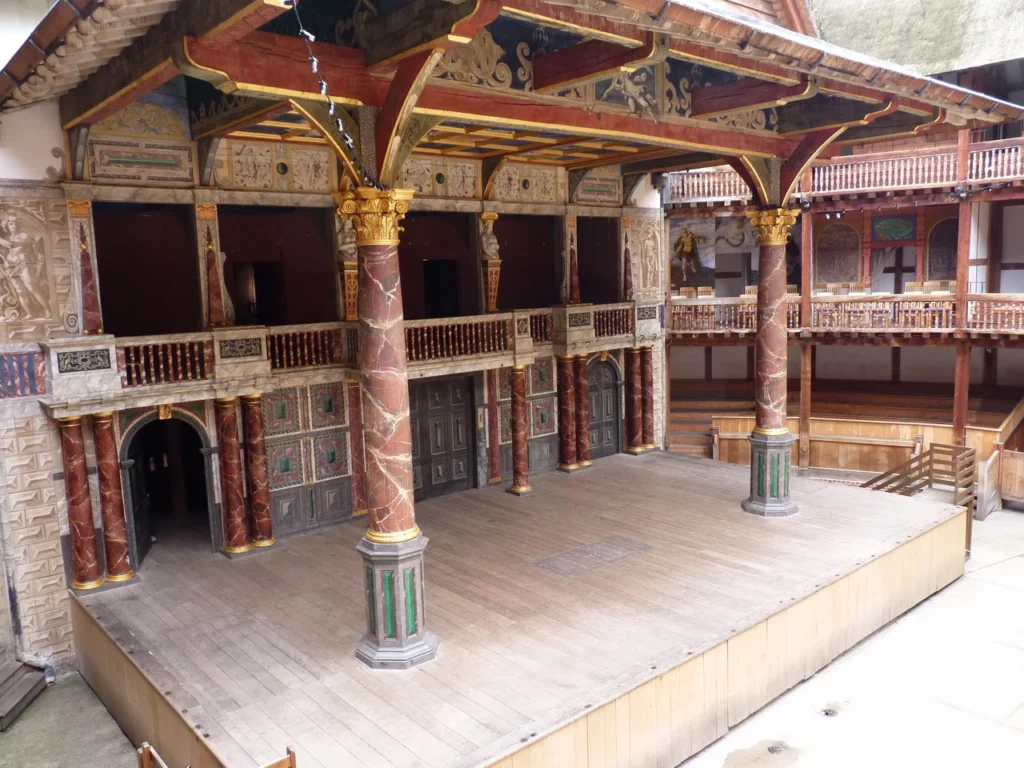
The later portion of Nashe’s entertainment continues the seasonal allegory and leads toward the conclusion and epilogue.
For context on early modern performance, explore the world of Elizabethan performers.
Orion.
I am content, though hunting be not out,
We will goe hunt in hell for better hap.
One parting blowe, my hearts, vnto our friends,
To bid the fields and huntsmen all farewell:
Tosse vp your bugle hornes vnto the starres.
Toyle findeth ease, peace followes after warres.
Exit.
Here they goe out, blowing their hornes, and hallowing, as they came in.
Will Summer.
Faith, this Sceane of Orion, is right prandium caninum, a dogs dinner, which as it is without wine, so here's a coyle about dogges, without wit. If I had thought the ship of fooles would haue stay de to take in fresh water at the Ile of dogges, I would haue furnisht it with a whole kennell of collections to the purpose. I haue had a dogge my selfe, that would dreame, and talke in his sleepe, turne round like Ned foole, and sleepe all night in a porridge pot. Marke but the skirmish betweene sixpence and the foxe, and it is miraculous, how they ouercome one another in honorable curtesy. The foxe, though he weares a chayne, runnes as though hee were free, mocking vs (as it is a crafty beast) because we hauing a Lord and master to attend on, runne about at our pleasures, like masterles men. Young sixpence, the best page his master hath, playes a little, and retires. I warrant, he will not be farre out of the way, when his master goes to dinner. Learne of him, you deminitiue vrchins, howe to behaue your selues in your vocation, take not vp your standings in a nuttree, when you should be waiting on my Lords trencher. Shoote but a bit at buttes, play but a span at poyntes. What euer you doe, memento mori: remember to rise betimes in the morning.
Summer.
Vertumnus, call Haruest.
Vertumnus.
Haruest, by west, and by north, by south and southeast, shewe thy selfe like a beast. Goodman Haruest yeoman, come in, and say what you can: roome for the sithe and the siccles there.
Enter Haruest with a sythe on his neck, & all his reapers with siccles, and a great black bowle with a posset in it, borne before him: they come in singing.
The Song.
Merry, merry, merry, cheary, cheary, cheary,
Trowle the black bowle to me,
Hey derry, derry, with a poupe and a lerry,
Ile trowle it againe to thee:
Hooky, hooky, we haue shorne,
and we haue bound,
And we haue brought Haruest
home to towne.
Summer.
Haruest, the Bayly of my husbandry,
What plenty hast thou heapt into our Barnes?
I hope thou hast sped well thou art so blithe.
Haruest.
Sped well, or ill sir, I drinke to you on the same:
Is your throate cleare to helpe vs to sing, hooky, hooky?
Heere they all sing after him,
Hooky, hooky, we haue shorne,
and we haue bound,
And we haue brought haruest
home to towne.
Autumne.
Thou Coridon, why answer'st not direct?
Haruest.
Answere? why friend, I am no tapster, to say, Anon, anon, sir: but leaue you to molest me, goodman tawny leaues, for feare (as the prouerbe sayes, leaue is light) so I mow off all your leaues with my sithe.
Winter.
Mocke not, & mowe not too long you were best,
For feare we whet not your sythe vpon your pate.
Summer.
Since thou art so peruerse in answering,
Haruest, heare what complaints are brought to me.
Thou art accused by the publike voyce,
For an ingrosser of the common store,
A Carle, that hast no conscience, nor remorse,
But doost impouerish the fruitfull earth,
To make thy garners rise vp to the heauens.
To whom giuest thou? who feedeth at thy boord?
No almes, but vnreasonable gaine,
Disgests what thy huge yron teeth deuoure:
Small beere, course bread, the hynds and beggers cry,
Whilest thou with holdest both the mault and flowre,
And giu'st vs branne, and water, (fit for dogs.)
Haruest.
Hooky, hooky, if you were not my Lord, I would say you lye. First and formost you say I am a Grocer. A Grocer is a citizen: I am no citizen, therefore no Grocer. A hoorder vp of graine: that's false; for not so much but my elbows eate wheate euery time I leane on them. A Carle: that is as much to say, as a conny-catcher of good fellowship. For that one word, you shall pledge me a carouse: eate a spoonfull of the curd to allay your choller. My mates and fellowes, sing no more, Merry, merry: but weep out a lamētable hooky, hooky, and let your Sickles cry, Sicke, sicke, and very sicke, & sicke, and for the time; for Haruest your master is abusde without reason or rime. I haue no conscience I; Ile come neerer to you, and yet I am no scabbe, nor no louse. Can you make proofe where euer I sold away my conscience, or pawnd it? doe you know who would buy it, or lend any money vpon it? I thinke I haue giuen you the pose; blow your nose, master constable. But to say that I impouerish the earth, that I robbe the man in the moone, that I take a purse on the top of Paules steeple; by this straw and third I sweare, you are no gentleman, no proper man, no honest man, to make mee sing, O man in desperation.
Summer.
I must giue credit vnto what I heare;
For other then I heare, attract I nought.
Haruest.
I, I, nought seeke, nought haue: an ill husband is the first steppe to a knaue. You obiect I feede none at my boord. I am sure, if you were a hogge, you would neuer say so: for, surreuerence of their worships, they feed at my stable, table, euery day. I keepe good hospitality for hennes & geese; Gleaners are oppressed with heauy burdens of my bounty. They rake me, and eate me to the very bones, till there be nothing left but grauell and stones, and yet I giue no almes, but deuoure all. They say when a man cannot heare well, you heare with your haruest eares: but if you heard with your haruest eares, that is, with the eares of corne, which my almescart scatters, they would tell you, that I am the very poore mans boxe of pitie, that there are more holes of liberality open in haruests heart, then in a siue, or a dust-boxe. Suppose you were a craftsman, or an Artificer, and should come to buy corne of mee, you should haue bushels of mee, not like the Bakers loafe, that should waygh but sixe ounces, but vsury for your mony, thousands for one: what would you haue more? Eate mee out of my apparell, if you will, if you suspect mee for a miser.
Summer.
I credit thee, and thinke thou wert belide.
But tell mee, hadst thou a good crop this yeare?
Haruest.
Hay, Gods plenty, which was so sweete and so good, that when I ierted my whip, and said to my horses but Hay, they would goe as they were mad.
Summer.
But hay alone thou saist not; but hay-ree.
Haruest.
I sing hay-ree, that is, hay and rye: meaning, that they shall haue hay and rye their belly-fulls, if they will draw hard; So wee say, wa, hay, when they goe out of the way: meaning, that they shall want hay, if they will not doe as they should doe.
Summer.
How thriue thy oates, thy barley, and thy wheate?
Haruest.
My oates grew like a cup of beere that makes the brewer rich: my rye like a Caualier, that weares a huge feather in his cap, but hath no courage in his heart; had a long stalke, a goodly huske, but nothing so great a kernell as it was wont: my barley, euen as many a nouice is crossebitten, as soone as euer hee peepes out of the shell, so was it frost-bitten in the blade, yet pickt vp his crummes agayne afterward, and bade, Fill pot, hostesse, in spite of a deare yeere. As for my Pease and my Fetches, they are famous, and not to be spoken of.
Autumne.
I, I, such countrey button'd caps as you,
Doe want no fetches to vndoe great townes.
Haruest.
Will you make good your words, that wee want no fetches?
Winter.
I, that he shall.
Haruest.
Then fetch vs a cloake-bagge, to carry away your selfe in.
Summer.
Plough-swaynes are blunt, and will taunt bitterly.
Haruest, when all is done, thou art the man,
Thou doest me the best seruice of them all:
Rest from thy labours till the yeere renues,
And let the husbandmen sing of thy prayse.
Haruest.
Rest from my labours, and let the husbandmen sing of my prayse? Nay, we doe not meane to rest so; by your leaue, we'le haue a largesse amongst you, e're we part.
All.
A largesse, a largesse, a largesse.
Will Summer.
Is there no man that will giue them a hisse for a largesse?
Haruest.
No, that there is not, goodman Lundgis: I see, charitie waxeth cold, and I thinke this house be her habitatiō, for it is not very hot; we were as good euen put vp our pipes, and sing Merry, merry, for we shall get no money.
Here they goe out all singing,
Merry, merry, merry, cheary, cheary, cheary,
Trowle the blacke bowle to me:
Hey derry, derry, with a poupe and a lerrie,
Ile trowle it againe to thee:
Hookie, bookie, we haue shorne and we haue bound,
And we haue brought haruest home to towne.
Will Summer.
Well, go thy waies, thou bundle of straw; Ile giue thee this gift, thou shalt be a Clowne while thou liu'st. As lustie as they are, they run on the score with Georges wife for their posset, and God knowes who shal pay goodman Yeomans, for his wheat sheafe: they may sing well enough, Trowle the blacke bowle to mee, trowle the blacke bowle to mee: for, a hundreth to one, but they will bee all drunke, e're they goe to bedde: yet, of a slauering foole, that hath no conceyte in any thing, but in carrying a wand in his hand, with commendation when he runneth by the high way side, this stripling Haruest hath done reasonable well. O that some bodie had had the wit to set his thatcht suite on fire, and so lighted him out: If I had had but a Iet ring on my finger, I might haue done with him what I list; I had spoild him, I had tooke his apparrell prisoner; for it being made of straw, & the nature of let, to draw straw vnto it, I would haue nailde him to the pommell of my chaire, till the play were done, and then haue carried him to my chamber dore, and laide him at the threshold as a wispe, or a piece of mat, to wipe my shooes on, euerie time I come vp durtie.
Summer.
Vertumnus, call Bacchus.
Vertum.
Bacchus, Baccha, Bacchum, god Bacchus, god fatbacke, Baron of dubble beere, and bottle ale, come in & shew thy nose that is nothing pale: backe, backe there, god barrellbellie may enter.
Enter Bacchus riding vpon an Asse trapt in Iuie, himselfe drest in Vine leaues, and a garland of grapes on his head: his companions hauing all Iacks in their hands, and Iuie garlands on their heads, they come in singing.
The Song.
Mounsieur Mingo, for quaeffing doth surpasse,
In Cuppe, in Canne, or glasse.
God Bacchus doe mee right,
And dubbe mee knight Domingo.
Bacchus.
Wherefore didst thou call mee, Vertumnus? hast any drinke to giue mee? One of you hold my Asle while I light: walke him vp and downe the hall, till I talke a word or two.
Summer.
What, Bacchus: still animus in patinis, no mind but on the pot?
Bacchus.
Why, Summer, Summer, how would'st doe, but for rayne? What is a faire house without water comming to it? Let mee see how a smith can worke, if hee haue not his trough standing by him. What sets an edge on a knife? the grindstone alone? no, the moyst element powr'd vpō it, which grinds out all gaps, sets a poynt vpon it, & scowres it as bright as the firmament. So, I tell thee, giue a soldier wine before he goes to battaile, it grinds out all gaps, it makes him forget all scarres and wounds, and fight in the thickest of his enemies, as though hee were but at foyles, amongst his fellows. Giue a scholler wine, going to his booke, or being about to inuent, it sets a new poynt on his wit, it glazeth it, it scowres it, it giues him acumen. Plato saith, vinum esse fomitem quēdam, et incit abilem ingenij virtutisque. Aristotle saith, Nulla est magna scientia absque mixtura dementiae. There is no excellent knowledge without mixture of madnesse. And what makes a man more madde in the head then wine? Qui bene vult poyein, debet axtá pinyen, he that will doe well, must drinke well. Prome, prome, potum prome: Ho butler, a fresh pot. Nunc est bibēdum, nunc pede libero terra pulsanda: a pox on him that leaues his drinke behinde him; hey Rendouow.
Summer.
It is wines custome, to be full of words.
I pray thee, Bacchus, giue vs vicissitudinem loquendi.
Bacchus.
A fiddlesticke, ne're tell me I am full of words. Foecundi calices, quem non fecere desertum: aut epi, aut abi, eyther take your drinke, or you are an infidell.
Summer.
I would about thy vintage question thee:
How thriue thy vines? hadst thou good store of grapes?
Bac.
Vinum quasivenenum, wine is poyson to a sicke body; a sick body is no sound body; Ergo, wine is a pure thing, & is poyson to all corruption. Try-lill, the hūters hoope to you: ile stand to it, Alexander was a braue man, and yet an arrant drunkard.
Winter.
Fye, drunken sot, forget'st thou where thou art?
My Lord askes thee, what vintage thou hast made?
Bac.
Our vintage, was a vintage, for it did not work vpon the aduantage, it came in the vauntgard of Summer, & winds and stormes met it by the way, and made it cry, Alas and welladay.
Summer.
That was not well, but all miscaried not?
Bac.
Faith, shal I tel you no lye? Because you are my coūtryman, & so forth, & a good fellow, is a good fellow, though he haue neuer a penny in his purse: We had but euen pot luck, a little to moysten our lips, and no more. That same Sol, is a Pagan, and a Proselite, hee shinde so bright all summer, that he burnd more grapes, then his beames were worth, were euery beame as big as a weauers beame. A fabis abstinendum: faith, he shuld haue abstaind: for what is flesh & blud without his liquor?
Autumne.
Thou want'st no liquor, nor no flesh and bloud.
I pray thee may I aske without offence?
How many tunnes of wine hast in thy paunch?
Me thinks, that, built like a round church,
Should yet haue some of Iulius Caesars wine:
I warrant, 'twas not broacht this hundred yere.
Bacchus.
Hear'st, thou dow-belly, because thou talkst, and talkst, & dar'st not drinke to me a black Iack, wilt thou giue me leaue, to broach this little kilderkin of my corps, against thy backe? I know thou art but a mycher, & dar'st not stand me. A voni, moūsieur Winter, a frolick vpsy freese, crosse, ho, super nagulū. [Knockes the Iacke vpon his thumbe.]
Winter.
Grammercy, Bacchus, as much as though I did.
For this time thou must pardon me perforce.
Bacchus.
What, giue me the disgrace? Goe to, I say, I am no Pope, to pardō any man. Ran, ran, tarra, cold beere makes good bloud. S. George for Englād: somewhat is better then nothing. Let me see, hast thou done me iustice? why so: thou art a king, though there were no more kings in the cards but the knaue. Summer, wilt thou haue a demy culuering, that shall cry husty tusty, and make thy cup flye fine meale in the Element?
Summer.
No, keepe thy drinke, I pray thee, to thy selfe.
Bacchus.
This Pupillonian in the fooles coate, shall haue a cast of martins, & a whiffe. To the health of Captaine Rinocerotry: looke to it, let him haue weight and measure.
Will Summer.
What an asse is this? I cannot drinke so much, though I should burst.
Bacchus.
Foole, doe not refuse your moyst sustenance; come, come, dogs head in the pot, doe what you are borne to.
Will Summer.
If you will needs make me a drunkard against my will, so it is, ile try what burthen my belly is of.
Bacchus.
Crouch, crouch on your knees, foole, when you pledge god Bacchus.
Here Will Sūmer drinks, & they sing about him. Bacchus begins. All, Mounsieur Mingo for quaffing did surpasse, In Cup, in Can, or glasse.
Bacchus.
Ho, wel shot, a tutcher, a tutcher: for quaffing Toy doth passe, in cup, in canne, or glasse.
All.
God Bacchus doe him right, and dubbe him knight.
Bac.
Rise vp Sir Robert Tospot.
Here he dubs Will Summer with the black Iacke.
Sum,
No more of this, I hate it to the death.
No such deformer of the soule and sence,
As is this swynish damn'd-borne drunkennes.
Bacchus, for thou abusest so earths fruits,
Impris'ned liue in cellars and in vawtes,
Let none commit their counsels vnto thee:
Thy wrath be fatall to thy dearest friends,
Vnarmed runne vpon thy foemens swords,
Neuer feare any plague, before it fall:
Dropsies, and watry tympanies haunt thee,
Thy lungs with surfeting be putrified,
To cause thee haue an odious stinking breath,
Slauer and driuell like a child at mouth,
Bee poore and beggerly in thy old age,
Let thy owne kinsmen laugh, when thou complaynst,
And many teares gayne nothing but blind scoffes.
This is the guerdon due to drunkennes;
Shame, sicknes, misery, followe excesse.
Bacchus.
Now on my honor, Sim Summer, thou art a bad member, a Dunse, a mungrell, to discredit so worshipfull an arte after this order. Thou hast curst me, and I will blesse thee: Neuer cup of Nipitaty in London, come neere thy niggardly habitation. I beseech the gods of good fellowship, thou maist fall into a consumption with drinking smal beere. Euery day maist thou eate fish, and let it sticke in the midst of thy maw, for want of a cup of wine to swim away in. Venison be Venenum to thee: & may that Vintner haue the plague in his house, that sels thee a drop of claret to kill the poyson of it. As many wounds maist thou haue, as Casar had in the Senate house, and get no white wine to wash them with: And to conclude, pine away in melancholy and sorrow, before thou hast the fourth part of a dramme of my Iuice to cheare vp thy spirits.
Summer.
Hale him away, he barketh like a wolfe,
It is his drinke, not hee that rayles on vs.
Bacchus.
Nay soft, brother Summer, back with that foote, here is a snuffe in the bottome of the Iack, inough to light a man to bed withall, wee'le leaue no flocks behind vs whatsoeuer wee doe.
Summer.
Go dragge him hence I say when I commaund.
Bacchus.
Since we must needs goe, let's goe merrily.
Farewell, sir Robert Tosse-pot: sing amayne, Mounsieur Myngo, whilest I mount vp my Asse.
Here they goe out singing, Mounsieur Myngo, as they came in.
Will Summer.
Of all gods, this Bacchus is the ill-fauourd'st misshapen god that euer I sawe. A poxe on him, he hath cristned me with a newe nickname of sir Robert Tosse-pot, that will not part frō me this twelmonth. Ned fooles clothes are so perfumde with the beere he powrd on me, that there shall not be a Dutchmā within 20 mile, but he'le smel out & claime kindred of him. What a beastly thing is it, to bottle vp ale in a mās belly, whē a man must set his guts on a gallō pot last, only to purchase the alehouse title of a boone companion? Carowse, pledge me and you dare: S'wounds, ile drinke with thee for all that euer thou art worth. It is euē as 2. men should striue who should run furthest into the sea for a wager. Me thinkes these are good houshold termes; Wil it please you to be here, sir? I cōmend me to you: shall I be so bold as trouble you? sauing your tale I drink to you. And if these were put in practise but a yeare or two in tauernes, wine would soone fall from six and twentie pound a tunne, and be beggers money, a penie a quart, and take vp his Inne with wast beere in the almes tub. I am a sinner as others: I must not say much of this argument. Euerie one when hee is whole, can giue aduice to them that are sicke. My masters, you that be good fellowes, get you into corners, and soupe off your prouender closely: report hath a blister on her tongue: open tauerns are tel-tales. Non peccat, quicun que potest peccasse negare.
Summer.
Ile call my seruants to account said I?
A bad account: worse seruants no man hath.
Quos credis sides effuge, tutus eris:
The prouerbe I haue prou'd to be too true,
Totidem domi hostes habemus, quot seruos.
And that wise caution of Democritus,
Seruns necessaria possessio, non autem dulcis:
No where fidelitie and labour dwels.
Hope, yong heads count to build on had I wist.
Conscience but few respect, all hunt for gaine:
Except the Cammell haue his prouender
Hung at his mouth, he will not trauell on.
Tyresias to Narcissus promised
Much prosperous hap, and many golden daies,
If of his beautie he no knowledge tooke.
Knowledge breeds pride, pride breedeth discontent.
Blacke discontent, thou vrgest to reuenge.
Reuenge opes not her eares to poore mens praiers.
That dolt destruction, is she without doubt,
That hales her foorth and feedeth her with nought.
Simplicitie and plainnesse, you I loue:
Hence double diligence, thou mean'st deceit.
Those that now serpent-like creepe on the ground,
And seeme to eate the dust, they crowch so low:
If they be disappointed of their pray,
Most traiterously will trace their tailes and sting.
Yea, such as like the Lapwing build their nests
In a mans dung, come vp by drudgerie,
Will be the first, that like that foolish bird,
Will follow him with yelling and false cries.
Well sung a shepheard (that now sleepes in skies)
Dumbe swaines do loue, & not vaine chattering pies.
In mountaines Poets say Eccho is hid,
For her deformitie and monstrous shape:
Those mountaines are the houses of great Lords,
Where Scenter with his hundreth voices sounds
A hundreth trumpes at once with rumor fild:
A woman they imagine her to be,
Because that sexe keepes nothing close they heare:
And that's the reason magicke writers frame,
There are more witches women then of men;
For women generally for the most part,
Of secrets more desirous of, then men,
Which hauing got, they haue no powerto hold.
In these times had Ecchoes first fathers liu'd,
No woman, but a man she had beene faind.
(Though women yet will want no newes to prate.)
For men (meane men) the skumme & drosse of all,
Will talke and babble of they know not what,
Vpbraid, depraue, and taunt, they care not whom:
Sumises passe for sound approued truthes:
Familiaritie and conference,
That were the sinewes of societies,
Are now for vnderminings onely vsde,
And novell wits, that loue none but themselues,
Thinke wisedomes height as falshood slily couch't,
Seeking each other to o'rethrow his mate.
O friendship, thy old temple is defac't.
Embrasing euery guilefull curtesie,
Hath ouergrowne fraud-wanting honestie.
Examples liue but in the idle schooles:
Sinon beares all the sway in princes courts:
Sicknes, be thou my soules phisition:
Bring the Apothecarie death with thee.
In earth is hell, true hell felicitie,
Compared with this world the den of wolues.
Aut.
My Lord, you are too passionate without cause.
Winter.
Grieue not for that which cannot be recal'd:
Is it your seruants carelesnesse you plaine?
Tullie by one of his owne slaues was slaine.
The husbandman close in his bosome nurst
A subtill snake, that after wrought his bane.
Autumne.
Seruos fideles liberalitaes facit:
Where on the contrarie, seruitutem:
Those that attend vponilliberall Lords,
Whose couetize yeelds nought els but faire lookes,
Euen of those faire lookes make their gainfull vse.
For as in Ireland and in Denmarke both
Witches for gold will sell a man a wind,
Which in the corner of a napkin wrapt,
Shall blow him safe vnto what coast he will:
So make ill seruants sale of their Lords wind,
Which wrapt vp in a piece of parchment,
Blowes many a knaue forth danger of the law.
Summer.
Inough of this, let me go make my will.
Ah it is made, although I hold my peace,
These two will share betwixt them what I haue.
The surest way to get my will perform'd,
Is to make my executour my heire:
And he, if all be giuen him and none els,
Vnfallibly will see it well perform'd.
Lyons will feed, though none bid them go to.
Ill growes the tree affordeth ne're a graft.
Had I some issue to sit in my throne,
My griefe would die, death should not heare mee grone.
But when perforce these must enioy my wealth,
Which thanke me not, but enter't as a pray,
Bequeath'd it is not, but cleane cast away.
Autumne, be thou successor of my seat:
Hold, take my crowne: looke how he graspes for it.
Thou shalt not haue it yet: but hold it too;
Why should I keep that needs I must forgo?
Winter.
Then (dutie laid aside) you do me wrong:
I am more worthie of it farre then he.
He hath no skill nor courage for to rule,
A weather-beaten banckrout asse it is,
That scatters and consumeth all he hath:
Eche one do plucke from him without controll.
He is nor hot nor cold, a sillie soule,
That faine would please eche party, if so he might:
He and the spring are schollers fauourites.
What schollers are, what thriftles kind of men,
Your selfe be iudge, and iudge of him by them.
When Cerberus was headlong drawne from hell,
He voided a blacke poison from his mouth,
Called Aconitum, whereof inke was made:
That inke with reeds first laid on dried barkes,
Seru'd men a while to make rude workes withall,
Till Hermes, secretarie to the Gods,
Or Hermes Trismegistus as some will,
Wearie with grauing in blind characters,
And figures of familiar beasts and plants,
Inuented letters to write lies withall.
In them he pend the fables of the Gods,
The gyants warre, and thousand tales besides.
After eche nation got these toyesin vse,
There grew vp certaine drunken parasites,
Term'd Poets, which for a meales meat or two,
Would promise monarchs immortalitie:
They vomited in verse all that they knew,
Found causes and beginnings of the world,
Fetcht pedegrees of mountaines and of flouds,
From men and women whom the Gods transform'd:
If any towne or citie, they pass'd by,
Had in compassion (thinking them mad men)
Forborne to whip them, or imprison them,
That citie was not built by humane hands,
T'was raisde by musique, like Megara walles,
Apollo, poets patron founded it,
Because they found one fitting fauour there:
Musaeus, Lynus, Homer, Orpheus,
Were of this trade, and thereby wonne their fame.
Will. Summer.
Famamalum, quo non velocius vllum.
Winter.
Next them, a company of ragged knaues,
Sun-bathing beggers, lazie hedge-creepers,
Sleeping face vpwards in the fields all night,
Dream'd strange deuices of the Sunne and Moone,
And they like Gipsies wandring vp and downe,
Told fortunes, iuggled, nicknam'd all the starres,
And were of idiots term'd Philosophers:
Such was Pithagoras the silencer,
Prometheus, Thales, Milesius,
Who would all things of water should be made:
Anaximander, Anaximenes,
That positiuely said the aire was God;
Zenocrates, that said there were eight Gods:
And Cratoniates, Alcmeon too,
Who thought the Sun and Moone, & stars were gods:
The poorer sort of them that could get nought,
Profest, like beggerly Franciscan Friers,
And the strict order of the Caponchins,
A voluntarie wretched pouertie,
Contempt of gold, thin fare, and lying hard:
Yet he that was most vehement in these,
Diogenes the Cinicke and the Dogge,
Was taken coyning money in his Cell.
Wil Summer.
What an olde Asse was that? Me thinks, hee should haue coynde Carret rootes rather: for as for money, he had no vse for, except it were to melt, and soder vp holes in his tub withall.
Winter.
It were a whole Olimpiades worke to tell,
How many diuillish, ergo armed arts,
Sprung all as vices, of this Idlenesse:
For euen as souldiers not imployde in warres,
But liuing loosely in a quiet state,
Not hauing wherewithall to maintaine pride,
Nay scarce to finde their bellies any foode,
Nought but walke melancholie, and deuise
How they may cousen Marchats, fleece young heires,
Creepe into fauour by betraying men,
Robbe churches, beg waste toyes, court city dames,
Who shall vndoe their husbands for their sakes:
The baser rabble how to cheate and steale,
And yet be free from penaltie of death.
So those word-warriers, lazy star-gazers,
Vsde to no labour, but to lowze themselues,
Had their heads fild with coosning fantasies,
They plotted how to make their pouertie,
Better esteemde of, then high Soueraignty:
They thought how they might plant a heauē on earth,
Whereof they would be principall lowe gods,
That heauen they called Contemplation,
As much to say, as a most pleasant slouth,
Which better I cannot compare then this,
That if a fellow licensed to beg,
Should all his life time go from faire to faire,
And buy gape-seede, hauing no businesse else.
That contemplation like an aged weede,
Engendred thousand sects, and all those sects
Were but as these times, cunning shrowded rogues,
Grammarians some: and wherein differ they
From beggers, that professe the Pedlers French?
The Poets next, slouinly tatterd slaues,
That wander, and sell Ballets in the streetes.
Historiographers others there be,
And the like lazers by the high way side,
That for a penny, or a halfe-penny,
Will call each knaue a good fac'd Gentleman,
Giue honor vnto Tinkers, for good Ale,
Preferre a Cobler fore the Black prince farre,
If he bestowe but blacking of their shooes:
And as it is the Spittle-houses guise,
Ouer the gate to write their founders names,
Or on the outside of their walles at least,
In hope by their examples others moou'd.
Will be more bountifull and liberall,
So in the forefront of their Chronicles,
Or Peroratione operis,
They learnings benefactors reckon vp,
Who built this colledge, who gaue that Free-schoole,
What King or Queene aduaunced Schollers most,
And in their times what writers flourished;
Rich men and magistrates whilest yet they liue,
They flatter palpably, in hope of gayne.
Smooth-tounged Orators, the fourth in place,
Lawyers, our common-wealth intitles them,
Meereswash-bucklers, and ruffianly mates,
That will for twelue pence make a doughtie fray,
Set men for strawes together by the eares.
Skie measuring Mathematicians;
Golde-breathing Alcumists also we haue,
Both which are subtill witted humorists,
That get their meales by telling miracles,
Which they haue seene in trauailing the skies,
Vaine boasters, lyers, make-shifts, they are all,
Men that remoued from their inkehorne termes,
Bring forth no action worthie of their bread.
What should I speake of pale physicions?
Who as Fismenus non nasatus was,
(Vpon a wager that his friends had laid)
Hir'de to liue in a priuie a whole yeare:
So are they hir'de for lucre and for gaine,
All their whole life to smell on excrements.
Wil. Summer.
Very true, for I haue heard it for a prouerbe many a time and oft, Hunc os fatidum, fah, he stinkes like a phisicion.
Winter.
Innumerable monstrous practises,
Hath loytring contemplation brought forth more,
Which t'were too long particular to recite:
Suffice they all conduce vnto this end,
To banish labour, nourish slothfulnesse,
Pamper vp lust, deuise newfangled sinnes.
Nay I will iustifie there is no vice,
Which learning and vilde knowledge brought not in,
Or in whose praise some learned haue not wrote.
The arte of murther Machiauel hath pend:
Whoredome hath Ouid to vphold her throne:
And Aretine of late in Italie,
Whose Cortigiana toucheth bawdes their trade.
Gluttonie Epicurus doth defend,
And bookes of th'arte of cookerie confirme:
Of which Platina hath not writ the least.
Drunkennesse of his good behauiour
Hath testimoniall from where he was borne:
That pleasant worke de arte bibendi,
A drunken Dutchman spued outfew yeares since:
Nor wanteth sloth (although sloths plague bee want).
His paper pillers for to leane vpon,
The praise of nothing pleades his worthinesse.
Follie Erasmus sets a flourish on.
For baldnesse, a bald asse, I haue forgot,
Patcht vp a pamphletarie periwigge.
Slouenrie Grobianus magnifieth:
Sodomitrie a Cardinall commends,
And Aristotle necessarie deemes.
In briefe all bookes, diuinitie except,
Are nought but tales of the diuels lawes,
Poyson wrapt vp in sugred words,
Mans pride, damnations props, the worlds abuse:
Then censure (good my Lord) what bookemen are
If they be pestilent members in a state;
He is vnfit to sit at sterne of state,
That fauours such as will o'rethrow his state:
Blest is that gouernment where no arte thriues,
Vox populi, vex Dei:
The vulgars voice, it is the voice of God.
Yet Tully saith, Non est consilium in vulgo, non ratio, non discrimen, non differentia:
The vulgar haue no learning, wit, nor sence.
The mistocles hauing spent all his time
In studie of Philosophie and artes,
And noting well the vanitie of them,
Wisht with repentance, for his follie past,
Some would teach him th'arte of obliuion,
How to forget the arts that he had learnd.
And Cicero, whom we alleadg'd before,
(As saith Valerius) stepping into old age,
Despised learning, lothed eloquence.
Naso, that could speake nothing but pure verse,
And had more wit then words to vtter it,
And words as choise as euer Poet had,
Cride and exclaimde in bitter agonie,
When knowledge had corrupted his chaste mind,
Discite qui sapitis non haec qua scimus inertes,
Sed trepidas acies, & fera bella sequi.
You that be wise, and euer meane to thriue,
O studie not these toyes we sluggards vse,
But follow armes, and waite on barbarous warres.
Young men, yong boyes, beware of Schoolemasters,
They will infect you, marre you, bleare your eyes:
They seeke to lay the curse of God on you,
Namely confusion of languages,
Wherewith those that the towre of Babel built,
Accursed were in the worldes infancie.
Latin, it was the speech of Infidels.
Logique hath nought to say in a true cause.
Philosophie is curiositie:
And Socrates was therefore put to death,
Onely for he was a Philosopher:
Abhorre, contemne, despise, these damned snares.
Will Summer.
Out vpon it, who would be a Scholler? not I, I promise you: my minde alwayes gaue me, this learning was such a filthy thing, which made me hate it so as I did: when I should haue beene at schoole, construing Batte, mi fili, mi fili, mi Batte, I was close vnder a hedge, or vnder a barne wall, playing at spanne Counter, or Iacke in a boxe: my master beat me, my father beat me, my mother gaue me bread and butter, yee all this would not make me a squitter-booke. It was my destinie, I thanke her as a most courteous goddesse, that shee hath not cast me away vpon gibridge. O, in what a mightie vaine am I now against Horne-bookes! Here before all this companie, I professe my selfe on open enemy to Inke and paper. Ile make it good vpon the Accidence body, that In speech is the diuels Pater noster: Nownes and Pronounes, I pronounce you as traitors to boyes buttockes, Syntaxis and Prosodia, you are tormenters of wit, & good for nothing but to get a schoolemaster two pence a weeke. Hang copies, flye out phrase books, let pennes be turnd to picktooths: bowles, cards & dice, you are the true liberalsciēces, Ile ne're be Goosequil, gentlemē, while I liue.
Sūmer.
Winter, with patience vnto my griefe,
I haue attended thy inuectiue tale:
So much vntrueth wit neuer shadowed:
Gainst her owne bowels thou Arts weapons turn'st:
Let none beleeue thee, that will euer thriue:
Words haue their course, the winde blowes where it lists;
He erres alone, in error that persists.
For thou gainst Autumne such exceptions tak'st,
I graunt, his ouer-seer thou shalt be,
His treasurer, protector, and his staffe,
He shall do nothing without thy consent;
Prouide thou for his weale, and his content.
Winter.
Thanks, gracious Lord. so Ile dispose of him,
As it shall not repent you of your gift.
Autumne.
On such conditions no crowne will I take.
I challenge Winter for my enemie,
A most insaciate miserable carle,
That, to fill vp his garners to the brim,
Cares not how he indammageth the earth:
What pouerty he makes it to indure!
He ouer-bars the christall streames with yee,
That none but he and his may drinke of them:
All for a fowle Back-winter he layes vp;
Hard craggie wayes, and vncouth slippery paths
He frames, that passengers may slide and fall:
Who quaketh not, that heareth but his name?
O, but two sonnes he hath, worse then himselfe,
Christmas the one, a pinch-back, cut-throate churle,
That keepes no open house, as he should do,
Delighteth in no game or fellowship,
Loues no good deeds, and hateth talke,
But sitteth in a corner turning Crabbes,
Or coughing o're a warmed pot of Ale:
Back-winter th'other, that's his none sweet boy,
Who like his father taketh in all points,
An elfe it is, compact of enuious pride,
A miscreant, borne for a plague to men.
A monster, that deuoureth all he meetes:
Were but his father dead, so he would raigne:
Yea he would go goodneere, to deale by him,
As Nabuchodonozors vngratious sonne,
Euilmerodach by his father dealt:
Who, when his sire was turned to an Oxe,
Full greedily suatcht vp his soueraigntie,
And thought himselfe a king without controwle.
So it fell out, seuen yeares expir'de and gone,
Nabuchodonozor came to his shape againe,
And dispossest him of the regiment:
Which my young prince no little greeuing at,
When that his father shortly after dide,
Fearing lest he should come from death againe,
As he came from an Oxe to be a man,
Wil'd that his body spoylde of couerture,
Should be cast foorth into the open fieldes,
For Birds and Rauens, to deuoure at will,
Thinking if they bare euery one of them,
A bill full of his flesh into their nests,
He would not rise, to trouble him in haste.
Will Summer.
A vertuous sonne, and Ile lay my life on't, he was a Caualiere and a good fellow.
Winter.
Pleaseth your honor, all he sayes, is false.
For my owne part I loue good husbandrie,
But hate dishonourable couetize.
Youth ne're aspires to vertues perfect growth,
Till his wilde oatesbe sowne: and so the earth,
Vntill his weeds be rotted, with my frosts,
Is not for any seede, or tillage fit.
He must be purged that hath surfeited:
The fields haue surfeited with Summer fruites,
They must be purg'd, made poore, opprest with snow,
Ere they recouer their decayed pride,
For ouerbarring of the streames with Ice.
Who locks not poyson from his childrens taste?
When Winter raignes, the water is so colde,
That it is poyson, present death to those
That wash, or bathe their lims, in his colde streames.
The slipprier that wayes are vnder vs,
The better it makes vs to heed our steps,
And looke e're we presume too rashly on:
If that my sonnes haue misbehau'd themselues,
A Gods name let them answer't fore my Lord.
Autumne.
Now I beseech your honor it may be so.
Summer.
With all my heart: Vertumnus, go for them.
Wil Summer.
This same Harry Baker is such a necessary fellow to go on arrants, as you shall not finde in a country. It is pitty but he should haue another siluer arrow, if it be but for crossing the stage, with his cap on.
Summer.
To wearie out the time vntill they come,
Sing me some dolefull ditty to the Lute,
That may complaine my neere approching death.
The Song.
Adieu, farewell earths blisse,
This world vncertaine is,
Fond are lifes lustfull ioyes,
Death proues them all but toyes,
None from his darts can flye,
I am sick, I must dye.
Lord haue mercy on vs.
Rich men, trust not in wealth,
Gold cannot buy you health,
Phisick himselfe must fade.
All things, to end are made,
The plague full swift goes hye,
I am sick, I must dye,
Lord haue mercy on vs.
Beauty is but a flowre,
Which wrinckles will deuoure,
Brightnesse falls from the ayre,
Queenes haue died yong, and faire,
Dust hath closde Helens eye.
I am sick, I must dye,
Lord haue mercy on vs.
Strength stoopes vnto the graue,
Wormes feed on Hector braue,
Swords may not fight with fate,
Earth still holds ope her gate,
Come, come, the bells do crye.
I am sick, I must dye,
Lord haue mercy on vs.
VVit with his wantonnesse,
Tasteth deaths bitternesse,
Hels executioner,
Hath no eares for to heare,
VVhat vaine art can reply.
I am sick, I must dye,
Lord haue mercy on vs.
Haste therefore eche degree,
To welcome destiny:
Heauen is our heritage,
Earth but a players stage,
Mount wee vnto the sky.
I am sick, I must dye,
Lord haue mercy on vs.
Summer.
Beshrew mee, but thy song hath moued mee.
Will Summer.
Lord haue mercy on vs, how lamentable 'tis▪
Enter Vertumnus with Christmas and Backwinter.
Vertumnus.
I haue dispatcht, my Lord, I haue brought you them you sent mee for.
Will Sūmer.
What saist thou? hast thou made a good batch?
I pray thee giue mee a new loafe.
Summer.
Christmas, how chaūce thou com'st not as the rest,
Accompanied with some musique, or some song?
A merry Carroll would haue grac't thee well,
Thy ancestors haue vs'd it heretofore.
Christmas.
I, antiquity was the mother of ignorance: this latter world that sees but with her spectacles, hath spied a pad in those sports more then they could.
Summer.
What, is't against thy conscience for to sing?
Christmas.
No nor to say, by my troth, if I may get a good bargaine.
Summer.
Why, thou should'st spend, thou should'st not care to get. Christmas is god of hospitality.
Christmas.
So will he neuer be of good husbandry. I may say to you, there is many an old god, that is now growne out of fashion. So is the god of hospitality.
Summer.
What reason canst thou giue he should be left?
Christmas.
No other reason, but that Gluttony is a sinne, & too many dunghils are infectious. A mans belly was not made for a poudring beefe tub: to feede the poore twelue dayes, & let them starue all the yeare after, would but stretch out the guts wider then they should be, & so make famine a bigger den in their bellies, then he had before. I should kill an oxe, & haue some such fellow as Milo to come and eate it vp at a mouth-full. Or like the Sybarites, do nothing all one yeare, but bid ghestes against the next yeare. The scraping of trenchers you thinke would put a man to no charges. It is not a hundreth pound a yeare would serue the scullions in dishclouts. My house stands vpon vaults, it will fall if it be ouer-loden with a multitude. Besides, haue you neuer read of a city that was vnderminde and destroyed by Mowles? So, say I keepe hospitalitie, and a whole faire of beggers bid me to dinner euery day, what with making legges, when they thanke me at their going away, and setling their wallets handsomly on their backes, they would shake as many lice on the ground, as were able to vndermine my house, and vndoe me vtterly: It is their prayers would builde it againe, if it were ouerthrowne by this vermine, would it? I pray, who begun feasting, and gourmandize first, but Sardanapalus, Nero, Heliogabalus, Commodus, tyrāts, whoremasters, vnthrifts? Some call them Emperours, but I respect no crownes, but crownes in the purse. Any mā may weare a siluer crowne, that hath made a fray in Smithfield, & lost but a peece of his braine pan. And to tell you plaine, your golden crownes are little better in substance, and many times got after the same sort.
Summer.
Grosse-headed sot, how light he makes of state!
Autumne.
Who treadeth not on stars when they are fallen?
Who talketh not of states, when they are dead?
A foole conceits no further then he sees,
He hath no scence of ought, but what he feeles.
Christmas.
I, I, such wise men as you, come to begge at such fooles doores as we be.
Autumne.
Thou shutst thy dore, how should we beg of thee?
No almes but thy sincke carries from thy house.
Wil Summer.
And I can tell you, that's as plentifull almes for the plague, as the sheriffes tub to them of Newgate.
Autumne.
For feasts thou keepest none, cankers thou feedst:
The wormes will curse thy flesh another day,
Because it yeeldeth them no fatter pray.
Christmas.
What wormes do another day I care not, but Ile be sworne vpon a whole Kilderkin of single Beere, I will not haue a worme-eaten nose like a Pursiuant, while I liue. Feasts ere but puffing vp of the flesh, the purueyers for diseases, trauell, cost, time ill spent. O, it were a trim thing to send, as the Romanes did, round about the world for prouision for one banquet. I must rigge ships to Samos for Peacocks, to Paphos for Pigeons, to Austria for Oysters, to Phasis for Phesants, to Arabia for Phaenixes, to Meander for Swans, to the Orcades for Geese, to Phrigia for Woodcocks, to Malta for Cranes, to the Isle of Man for Puffins, to Ambracia for Goates, to Tartole for Lampreys, to Egypt for Dates, to Spaine for Chestnuts, and all for one feast.
Wil Summer.
O sir, you need not, you may buy them at London better cheape.
Christmas.
Liberalit as liberalit ate perit, loue me a little and loue me long: our feete must haue wherewithall to feede the stones, out backs walles of wooll to keepe out the colde that besiegeth our warme blood, our doores must haue barres, our dubblets must haue buttons. Item, for an olde sword to scrape the stones before the dore with, three halfe-pence for stitching a wodden tanckard that was burst. These Water-bearers will empty the conduit and a mans coffers at once. Not a Porter that brings a man a letter, but will haue his penny. I am afraid to keepe past one or two seruants, least hungry knaues they should rob me: and those I keepe, I warrant I do not pamper vp too lusty, I keepe them vnder with red Herring and poore Iohn all the yeare long. I haue dambd vp all my chimnies for feare (though I burne nothing but small cole) my house should be set on fire with the smoake. I will not deny, but once in a dozen yeare when there is a great rot of sheepe, and I know not what to do with them, I keepe open house for all the beggers, in some of my out-yardes, marry they must bring bread with them, I am no Baker.
Wil Summer.
As good men as you, and haue thought no scorne to serue their prentiships on the pillory.
Summer.
Winter, is this thy sonne? hear'st how he talkes?
Winter.
I am his father, therefore may not speake,
But otherwise I could excuse his fault.
Summer.
Christmas, I tell thee plaine, thou art a snudge.
And wert not that we loue thy father well,
Thou shouldst haue felt, what longs to Auarice.
It is the honor of Nobility,
To keepe high dayes and solemne festiuals:
Then, to set their magnificence to view,
To frolick open with their fauorites,
And vse their neighbours with all curtesie,
When thou in huggar mugger spend'st thy wealth.
Amend thy maners, breathe thy rusty gold:
Bounty will win thee loue, when thou art old.
Wil Summer.
I, that bounty would I faine meete, to borrow money of, he is fairely blest now a dayes, that scapes blowes when he begges. Verba dandi & reddendi, goe together in the Grammer rule: there is no giuing but with condition of restoring: ah Benedicite, well is he hath no necessitie of gold ne of sustenance; slowe good hap comes by chance; flattery best fares; Arts are but idle wares; faire words want giuing hāds; the Leto begs that hath no lands; fie on thee thou scuruy knaue, that hast nought, and yet goest braue; a prison be thy death bed, or be hangd all saue the head.
Summer.
Back-winter, stand foorth.
Vertum.
Stand forth, stād forth, hold vp your head, speak out.
Back-winter.
What, should I stand? or whether, should I go?
Summer.
Autumne accuseth thee of sundry crimes,
Which heere thou art to cleare, or to confesse.
Back-winter.
With thee, or Autumne, haue I nought to do:
I would you were both hanged face to face.
Summer.
Is this the reuerence that thou ow'st to vs?
Back-winter.
Why not? what art thou?
Shalt thou alwayes liue?
Autumne.
It is the veriest Dog in Christendome.
Winter.
That's for he barkes at such a knaue as thou.
Back-winter.
Would I could barke the sunne out of the sky,
Turne Moone and starres to frozen Meteors,
And make the Ocean a dry land of Yce,
With tempest of my breath, turne vp high trees,
On mountaines heape vp second mounts of snowe,
Which melted into water, might fall downe,
As fell the deluge on the former world.
I hate the ayre, the fire, the Spring, the yeare,
And what so e're brings mankinde any good.
O that my lookes were lightning to blast fruites!
Would I with thunder presently might dye,
So I might speake in thunder, to slay men.
Earth, if I cannot iniure thee enough,
Ile bite thee with my teeth, Ile seratch thee thus,
Ile beate downe the partition with my heeles,
Which as a mud-vault seuers hell and thee.
Spirits, come vp, 'tis I that knock for you,
One that enuies the world, farre more then you:
Come vp in millions, millions are to few,
To execute the malice I intend.
Summer.
O scelus inauditum, O vox damnatorum!
Not raging Haecuba, whose hollow eyes
Gaue sucke to fiftie sorrowes at one time,
That mid wife to so many murders was,
Vsde halfe the execrations that thou doost.
Back-winter.
More I wil vse, if more I may preuaile:
Back-winter comes but seldome foorth abroad,
But when he comes, he pincheth to the proofe;
Winter is milde, his sonne is rough and sterne.
Ouid could well write of my tyrranny,
When he was banisht to the frozen Zoane.
Summer.
And banisht be thou frō my fertile bounds.
Winter, imprison him in thy darke Cell,
Or with the windes, in bellowing caues of brasse,
Let sterne Hipporlatos locke him vp safe,
Ne're to peepe foorth, but when thou faint and weake
Want'st him to ayde thee in thy regiment.
Back-winter.
I will peepe foorth, thy kingdome to supplant:
My father I will quickly freeze to death,
And then sole Monarch will I sit and thinke,
How I may banish thee, as thou doost me.
Winter.
I see my downefall written in his browes:
Conuay him hence, to his assigned hell.
Fathers are giuen to loue their sonnes too well.
Wil Summer.
No by my troth, nor mothers neither, I am sure I could neuer finde it. This Back-winter playes a rayling part to no purpose, my small learning findes no reason for it, except as a Back-winter or an after winter is more raging tempestuous, and violent then the beginning of Winter, so he brings him in stamping and raging as if he were madde, when his father is a iolly milde quiet olde man, and stands still and does nothing. The court accepts of your meaning; you might haue writ in the margent of your play-booke, Let there be a fewe rushes laide in the place where Back-winter shall tumble, for feare of raying his cloathes: or set downe, Enter Back-winter, with his boy, bringing a brush after him, to take off the dust if need require. But you will ne're haue any ward-robe wit while you liue. I pray you holde the booke well, we be not nonplus in the latter end of the play.
Summer.
This is the last stroke, my toungs clock must strike,
My last will, which I will that you performe:
My crowne I haue disposde already of.
Item, I giue my withered flowers, and herbes,
Vnto dead corses, for to decke them with,
My shady walkes to great mens seruitors,
Who in their masters shadowes walke secure,
My pleasant open ayre, and fragrant smels,
To Croyden and the grounds abutting round,
My heate and warmth to toyling labourers,
My long dayes to bondmen, and prisoners,
My short nights to young married soules,
My drought and thirst, to drunkards quenchlesse throates,
My fruites to Autumne my adopted heire,
My murmuring springs, musicians of sweete sleepe,
To murmuring male-contents, with their well tun'de cares,
Channel'd in a sweete falling quaterzaine,
Do lull their eares asleepe, listning themselues.
And finally, O words, now clense your course,
Vnto Eliza that most sacred Dame,
Whom none but Saints and Angels ought to name;
All my faire dayes remaining, I bequeath
To waite vpon her till she be returnd.
Autumne, I charge thee, when that I am dead,
Be prest and seruiceable at her beck,
Present her with thy goodliest ripened fruites,
Vnclothe no Arbors where she euer sate,
Touch not a tree, thou thinkst she may passe by.
And Winter, with thy wrythen frostie face,
Smoothe vp thy visage when thou lookst on her,
Thou neuer lookst on such bright maiestie:
A charmed circle draw about her court,
Wherein warme dayes may daunce, & no cold come,
On seas let winds make warre, not vexe her rest,
Quiet inclose her bed, thought flye her brest.
Ah gracious Queene, though Summer pine away,
Yet let thy flourishing stand at a stay,
First droupe this vniuersals aged frame,
E're any malady thy strength should tame:
Heauen raise vp pillers to vphold thy hand,
Peace may haue still his temple in thy land.
Loe, I haue said, this is the totall summe.
Autumne and Winter, on your faithfulnesse,
For the performance I do firmely builde.
Farewell, my friends, Summer bids you farewell,
Archers, and bowlers, all my followers,
A dieu, and dwell with desolation,
Silence must be your masters mansion:
Slow marching thus, discend I to the feends.
Weepe heauens, mourne earth, here Summer ends.
Heere the Satyres and Wood-nimphes carry him out, singing as he came in.
The Song.
Autumne hath all the Summers fruitefull treasure,
Gone is our sport, fled is poore Croydens pleasure:
Short dayes, sharpe dayes, long nights come on a pace,
Ah who shall hide vs, from the Winters face?
Colde dooth increase, the sicknesse will not cease,
And here we lye God knowes, with little ease:
From winter, plague & pestilence, good Lord deliuer vs.
London dooth mourne, Lambith is quite forlorne,
Trades cry, Woe worth, that euer they were borne:
The want of Terme, is towne and Cities harms,
Close chambers we do want, to keepe vs warme,
Long banished must we liue from our friends:
This lowe built bouse, will bring vs to our ends.
From winter, plague & pestilence, good Lord deliuer vs.
WilSummer.
How is't? how is't? you that be of the grauer sort, do you thinke these youths worthy of a Plaudite for praying for the Queene, and singing of the Letany? they are poore fellowes I must needes say, and haue bestowed great labour in sowing leaues, and grasse, and strawe, and mosse vpon cast suites. You may do well to warme your hands with clapping, before you go to bed, and send them to the tauerne with merry hearts. Here is a pretty boy comes with an Epilogue, to get [Enter a [gap in source]tle boy with an Epilogue.] him audacity. I pray you sit still a little, and heare him say his lesson without booke. It is a good boy, be not afraide, turne thy face to my Lord. Thou and I will play at poutch, to morrow morning for a breakfast. Come and sit on my knee, and Ile daunce thee, if thou canst not indure to stand.
The Epilogue.
VLisses a Dwarffe, and the prolocutor for the Graecians, gaue me leaue that am a Pigmee, to doe an Embassage to you from the Cranes: Gentlemen (for Kings are no better) certaine humble Animals, called our Actors, commend them vnto you; who, what offence they haue committed, I know not (except it be in purloyning some houres out of times treasury, that might haue beene better imployde; but by me (the agent for their imperfections) they humbly craue pardon, if happily some of their termes haue trodde awrye, or their tongues slumbled vnwittingly on any mans content. In much Corne is some Cockle; in a heape of coyne heere and there a peece of Copper; wit hath his dregs as well as wine; words their waste, Inke his blots, euery speech his Parenthesis, Poetical fury, as well Crabbes as Sweetings for his Summer fruites. Nemo sapit omnibus horis. Their folly is deceased, their feare is yet liuing. Nothing can kill an Asse but colde: colde entertainement, discouraging scoffes, authorized disgraces, may kill a whole litter of young Asses of them heere at once, that haue traueld thus farre in impudence, onely in hope to sit a sunning in your smiles. The Romanes dedicated a Temple to the feuer quartane, thinking it some great God, because it shooke them so: and another, to Ill fortune in Exquilliis a Mountaine in Roome, that it should not plague them at Cardes and Dice. Your Graces frownes are to them shaking feuers, your least disfauours, the greatest ill fortune that may betide them. They can builde no Temples, but themselues and their best indeuours, with all prostrate reuerence, they here dedicate and offer vp, wholy to your seruice. Sis bonus, O faelixque tuis. To make the gods merry, the coelestiall clowne Vulcan tun'de his polt foote, to the measures of Apolloes Lute, and daunst a limping Gallyard in Ioues starrie hall. To make you merry that are the Gods of Art, and guides vnto heauen, a number of rude Vulcans, vnweldy speakers, hammer-headed clownes (for so it pleaseth them in modestie to name themselues) haue set their deformities to view, as it were in a daunce here before you. Beare with their wants, lull melancholie asleepe with their absurdities, and expect hereafter better fruites of their industrie. Little creatures often terrifie great beasts: the Elephant flyeth from a Ramme, the Lyon from a Cock and from fire; the Crocodile from all Sea-fish, the Whale from the noyse of parched bones; light toyes chase great cares. The greatfoole Toy hath marde the play: Good night, Gentlemen; I go, let him be carryed away.
WilSummer. Is't true Iackanapes, doo you serue me so? As sure as this coate is too short for me, all the Points of your hoase for this are condemnde to my pocket, if you and I e're play at spanne Counter more. Valete, spectatores, pay for this sport with a Plaudite, and the next time the winde blowes from this corner, we will make you ten times as merry.
Barbarus hic ego sum, quia non intelligor vlli.
FINIS.