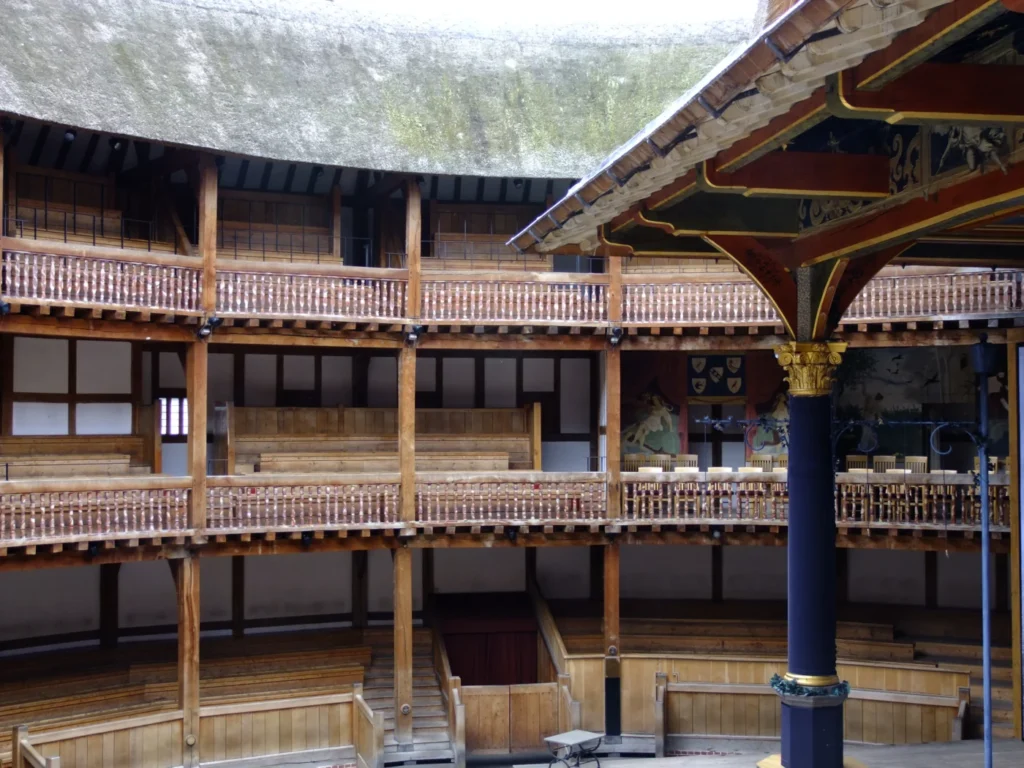
The prologues and first act of Sapho and Phao introduce Lyly’s courtly drama of love, status and desire.
For performance history, consult the theatre companies of Elizabethan England.
The Prologue at the Black fryers.
WHere the Bee can suck no honney, she leaueth her stinge behinde, and where the Beare cannot finde Origanum to heale his griefe, he blasteth all other leaues with his breath. Wee feare it is like to fare so with vs, that seeing you cannot draw from our labours sweete content, you leaue behinde you a sowre mislike, and with open reproach blame our good meaninges: because you cannot reap your wonted mirthes. Our intēt was at this time to moue inward delight, not outward lightnesse, and to breede, (if it might bee) soft smiling, not loude laughing: knowing it to the wise to be as great pleasure to heare counsell mixed with witte, as to the foolish to haue sporte mingled with rudenesse. They were banished the Theater at Athens, and from Rome hyssed, that brought parasites on the stage with apish actions, or fooles with vnciuill habites, or Curtisans with immodest words. We haue endeuoured to be as farre from vnseemely speaches, to make your eares glowe, as wee hope you will bee from vnkinde reportes to make our cheekes blush. The Griffyon neuer spreadeth her wings in the sunne, when she hath any sick feathers: yet haue we ventured to present out exercise beefore your indgements, when we know them full of weak matter, yeelding rather our selues to the curtesie, which we haue euer sound, then to the precisenesse, which wee ought to feare.
The Prologue at the Court.
THe Arabyās being stuffed with perfumes, burn Hemblock, a ranck poison: & in Hybla being cloid with hōney, they account it daintie to feede on waxe. Your Highnesse eies, whom varietie hath filled with fayre showes, and whose eares pleasure hath possessed with rare soundes, will (we trust) at this time resemble the princely Eagle, who fearing to surfeit on spices, stoupeth to bite on wormwood. We present no conceites nor warres, but deceites and loues, wherein the trueth may excuse the plainenesse. The necessitie, the length: the poetrie, the bitternesse. There is no needelesse point so smal, which hath not his cōpasse: nor haire so slender, which hath not his shadowe: nor sporte so simple, which hath not his shadowe: nor sporte so simple, which hath not showe. Whatsoeuer we presēt, whether it be tedious (which we feare) or toyishe (which we doubt) sweete or sowre, absolute or imperfect, or whatsoeuer, in al humblenesse we all, & I on knee for all, entreate, that your Highnesse imagine your self to be in a deepe dreame, that staying the conclusiō, in your rising your Maiestie vouchfafe but to saye, And so you awakte.
Actus primus. Schaena prima.
THou art a Ferriman, Phao, yet a free man, possessing for riches content, and for honors quiet. Thy thoughts are no higher thē thy fortunes, nor thy desires greater then thy calling. Who climeth, standeth on glasse, and falleth on thorne. Thy hearts thirste is satisfied with thy hands thrift, and thy gentle labours in the day, turne to sweete slumbers in the night. As much doth it delight thee to rule thine oare in a calme streame, as it dooth Sapho to swaye the Scepter in her braue court. Enuie neuer casteth her eie lowe, ambition pointeth alwaies vpwarde, and reuenge barketh onely at starres. Thou farest dilicately, if thou haue a fare to buy any thing. Thine angle is ready, when thine oar is idle, and as sweet is the fish which thou gettest in the ryuer, as the fowle which other buye in the market. Thou needst not feare poyson in thy glasse, nor treason in thy garde. The winde is thy greatest enemy, whose might is withstoode with pollicy. O sweete life seldom found vnder a goldē couert, oftē vnder a thached cotage. But here commeth one, I will withdrawe my selfe aside, it may be a passenger.
It is no lesse vnseemely then vnwholsom for Venus, who is most honoured in Princes courtes, to soiourne with Vulcan in a smithes forge, where bellowes blow in steede of sighes, dark smokes rise for sweet perfumes, & for the panting of louing hearts, is only heard the beating of steeled hāmers. Vnhappy Venus, yt cariing fire in thine own breast, thou shouldest dwel with fire in his forge. What doth Vulcan all day but endeuour to be as crabbed in maners, as he is crooked in body? driuing nailes, when he should giue kisses, and hammering hard armours, when he should sing sweete Amors. It came by lot, not loue, that I was lincked with him. He giues thee bolts, Cupid, in steed of arrowes, fearing belike (iealous foole that he is) that if he shuld giue thee an arrow head he should make himself a broad head. But come, we wil to Syracusa, where thy deitie shal be shown, and my disdaine. I will yoke the necke, that yet neuer bowed, at which, if Ioue repine, Ioue shal repent. Sapho shal know, be she neuer so faire, that there is a Venus, which can cō quer, were she neuer so fortunate.
If Ioue espie Sapho, he wil deuise some new shape to entertaine her.
Strike thou Sapho, let Ioue deuise what shape he can.
Mother, they say she hath her thoughtes in a string, that she conquers affections, and sendeth loue vp and downe vpon arrandes, I am afraid she wil yerke me, if I hit her.
Peeuish boy, can mortal creatures resist that, which the immortall Gods cannotredresse?
The Gods are amorous and therefore willing to be pearsed.
And she amiable, & therefore must be pearsed.
I dare not.
Draw thine arrow to the head, els I wil make thee repent it at the heart. Come away and behold the ferry boy ready to conduct vs. Prety youth, de you keep the ferry that bendeth to Syracusa?
The ferrie, faire Lady, that bendeth to Syracusa.
I feare if the water should begin to swel thou wilt want cunning to guide.
These waters are commonly as the passengers be, and therefore carying one so faire in shew, there is no cause to feare a rough sea.
To passe the time in thy boate, canst thou deuise any pastime?
If the winde be with me, I can angle, or tell tales: if against me, it will be pleasure for you to see mee take paines.
I like not fishing: yet was I borne of the sea.
But he may blesse fishing, that caught such an one in the sea.
It was not with an angle, my boy, but with a nette.
So was it said, that vulcan caught Mars with Venus.
Didst thou heare so? It was some tale.
Yea Madame and that in the boate I didde meane to make my tale.
It is not for a ferry man to talk of the Gods loues: but to tell how thy father could dig, and thy mother spinne. But come, let vs away.
I am ready to waite.
Actus primus, Schaena sccunda.
Pandion, since your comming from the vniuersitie to the court, from Athens to Syracusa, how doe you feele your self altered either in humor or opinion?
Altered Trachinus, I say no more, and shame that any should know so much.
Here you see as great vertue, far greater braue ry, the action of that which you cōtemplate▪ Sapho, faire by nature, by birth royall, learned by education by gouernment politike, rich by peace: insomuch as it is hard to iudge, whether she be more beautifull or wise, vertuous or fortunate. Beesides, doe you not looke on faire Ladies in steede of good letters, and behold faire faces in steed of fine phrases: In vniuersities vertues and vices are but shadowed in colours white and blacke, in courtes shewed to life good and bad. There, times paste are read of in old bookes, times present set downe by new deuises, times to come coniectured at by aime, by prophesie, or chaunce here, are times in perfection, nor by deuise, as fables, but in execution, as trueths. Beleeue me Pandion, in Athens you haue but tombs, we in court the bodies, you the pictures of Venus & the wise Goddesses, we the persons & the vertues. What hath a seh oller found out by study, that a courtier hath not found out by practise. Simple are you that think to see more at the candle snuffe, then the sunne beams, to saile further in a litle brooke, then in the maine Ocean, to make a greater haruest by gleaning, then reaping. How say you Pandion, is not all this true?
Trachinus, what would you more, all true.
Cease then to lead thy life in a study, pinned with a fewe boardes, and endeuour to be a courtier to liue in emboste rouffes.
A labour intollerable for Pandion.
Why?
Because it is harder to shape a life to dissemble, then to goe forward with the libertie of trueth.
Why do you thinke in court any vse to dissemble?
Doe you knowe in court any that meane to liue?
You haue no reasō for it, but an old reporte.
Reporte hath not alwaies a blister on her tongue.
I, but this is the court of Sapho natures miracle, which resembleth the tree Salurus, whose roote is fastened vpon knotted steele, & in whose top bud leaues of pure gold.
Yet hath Salurus blasts, and water boughes, wormes and Caterpillers.
The vertue of the tree is not the cause: but the Easterly wind, which is thought commonly to bring cankers and rottenesse.
Nor the excellencie of Sapho the occasion: but the iniquitie of flatterers, who alwaies whisper in Princes eares suspition and sowrenesse.
Why, then you conclude with me, that Sapho for vertue hath no copartner.
Yea, & with the iudgement of the world, that she is without comparison.
We wil thither streight.
I would I might returne streight.
Why, there you may liue stil.
But not still.
Howe like you the Ladies, are they not passing faire?
Mine eie drinketh neither the colour of wine nor women.
Yet am I sure that in iudgemente you are not so seuere, but that you can be content to allowe of bewtie by day or by night.
When I behold bewty before the sunne, his beams dimme bewtie: when by candle, bewty obscures toarch light: so as no time I can iudge, because at anie time I cannot discerne being in the sunne a brightnesse to shadow bewtie, and in bewtie a glistering to extinguish light.
Schollerlike said, you flatter that, whiche you seeme to mislike, and to disgrace that, which you moste wonder at. But let vs away.
I follow. And you sir boy goe to Syracusa about by land, where you shall meete my stuffe, pay for the cariage, and conuey it to my lodging.
I think all your stuffe are bundles of paper: but now must you learne to turne your library to a war drope, & see whether your rapier hang better by your side, then the penne did in your eare.
Actus primus, Schaena tertia.
Molus, what oddes betweene thy commons in Athens, and the diet in court? A pages life, & a scollers?
This difference: there of a litle I had somewhat, here of a great deale nothing, there did I weare Pantopheles on my legs, here doe I beare them in my handes.
Thou maist be skilled in thy Logick, but not in thy Lerypoope: belike no meate can downe with you, vnlesse you haue a knife to cutte it: but come among vs, and you shall see vs once in a morning haue a mouse at a bay.
A mouse? vnproperly spoken.
Aptly vnderstoode, a mouse of beafe.
I thinke indeed a peece of beafe as bigge as a mouse, serues a great companie of such cattes. But what els?
For other sportes, a square die in a pages pocket, is as decent as a square cap on a Graduates head.
You courtiers be mad fellowes, wee silly soules are onely plodders at Ergo, whose wittes are claspt vppe with our bookes, & so full of learning are we at home, that wescarce know good manners when wee come abroad, Cunning in nothing but in making small things great by figures, pulling on with the sweate of our studies a great shooe vpon a litle foote, burning out one cādle in seeking for an other, raw wordlings in matters of substaunce passing wranglers about shadowes.
Then is it time lost to be a scholler. We pages are Politians: for looke what we heare our maisters talke of, ve determine of: where we suspect, we vndermine: and where we mislike for some perticular grudge, there we pick quarrels for a generall griefe. Nothing amonge vs but in steede of good morow, what newes: wee fal from cogging at dice to cogge with states: & so forward are meane mē in those matters, that they wold be cocks to tread down others, before they be chickēs to rise themselues. Youthes are very forwarde to stroke their chins, though they haue no beardes, and to lie as lowd as hee that hath liued longest.
These be the golden daies.
Then be they very darke daies: for I can see no golde.
You are grosse witted, maister courtier.
And you maister scholler slender witted.
I meant times which were prophecied golden for plentie of all things, sharpnesse of wit, excellencie in knowledge, pollicy in gouernment, for,
Softe Scholaris, I denie your argument.
Why, it is no argument.
Then I denie it because it is no argument. But let vs go and follow our maisters.
Actus primus, Schaena quarta.
Is it not straung that Phao on the sodain shuld be so faire?
It cannot be straunge, sith Venus was disposed to make him faire. That cunning had beene better bestowed on women, which would haue deserued thankes of nature.
Haplye she did in spite of women, or scorne of nature.
Proude else, how squeamish he is be come alreadie, vsing both disdaineful lookes, & imperious words: insomuch that he galleth with ingratitude. And then Ladies you know how it cutteth a woman to become a wooer.
Tush, children and fooles, the fairer they are, the sooner they yeeld, an apple will catch the one, a baby the other.
Your loouer I thinke be a faire foole: for you loue nothing but fruit and puppets.
I laugh at that you all call loue, and iudge it onely a worde called loue. Me thinks lyking, a curtesie, a smile, a beck, and such like, are the very Quintessence of loue.
I, Mileta, but were you as wise, as you would be thought faire, or as faire, as you think your self wise, you would bee as ready to please men, as you are coye to pranke your selfe, & as carefull to bee accounted amorous, as you are willing to be thought discrete.
No, no, men are good soules (poore soules:) who neuer enquire but with their eies, louing to father the cradle, though they but mother the childe. Giue me their giftes, not their vertues, a graine of their golde weigheth downe a pound of their witt, a dram of giue me, is heauier then an ounce of heare me. Beleeue mee Ladies, giue is a pretie thing.
I cannot but oftentimes smile to my selfe, to heare men call vs weake vesselles, when they proue thē selues broken hearted, vs fraile, when their thoughtes cannot hang togeather, studying with words to flatter, and with bribes to allure, when we commōly wish their tongues in their purses, they speake so simply, and their offers in their bellies, they doe it so peeuishly.
It is good sporte to see them want matter: for then fall they to good manners, hauing nothing in their mouthes but sweet mistresse, wearing our hands out with courtly kissings, when their wits faile in courtly discourses. Now rufling their haires, now setting their ruffes, then gazing with their eies, then sighing with a priuie wring by the hand, thinking vs like to be wowed by signes and ceremonies.
Yet we, when we sweare with our mouthes wee are not in loue, then we sigh from the heart and pine in loue.
Wee are madde wenches, if men marke our wordes: for whē I say, I would none cared for loue more then I, what meane I, but I woulde none loued but I, where we cry away, doe we not presently say, go too: & when men striue for kisses, we exclaime, let vs alone, as though we would fall to that our selues.
Nay, then Canope, it is time to goe, and beehold Phao.
Where?
In your heade Ismena, no where els: but let vs keepe on our way.
Wisely.
Text edition: EEBO-TCP A06625 (CC0 1.0). The introductory summary is editorial.